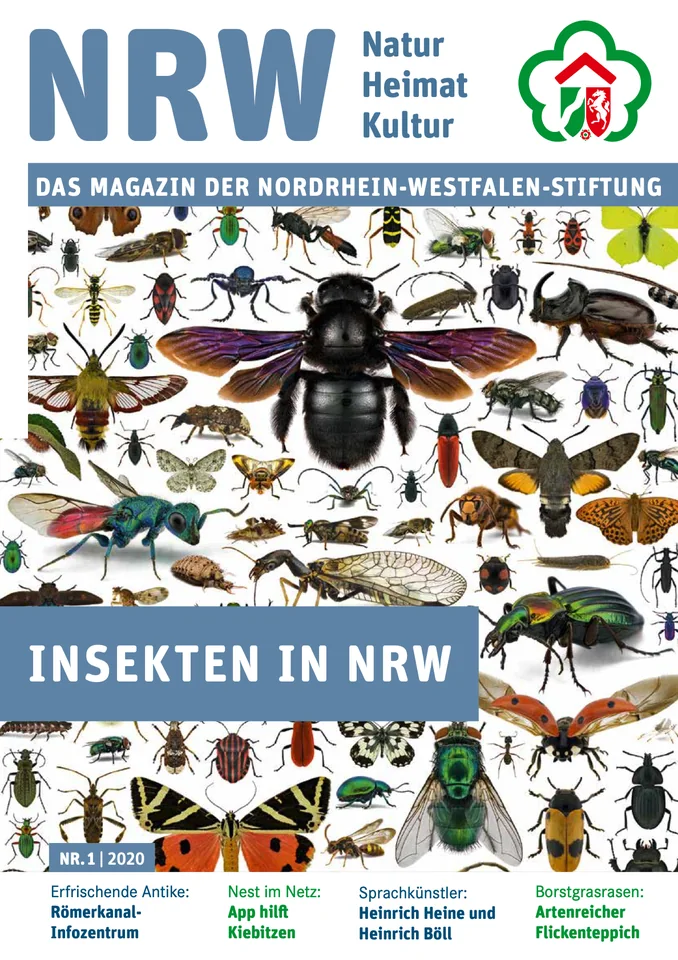
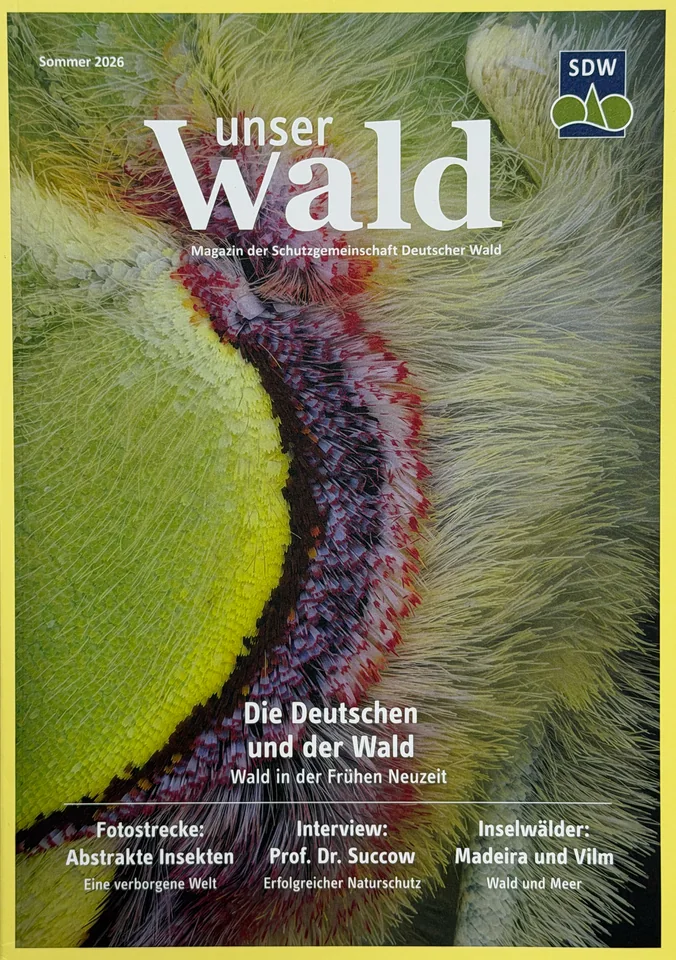
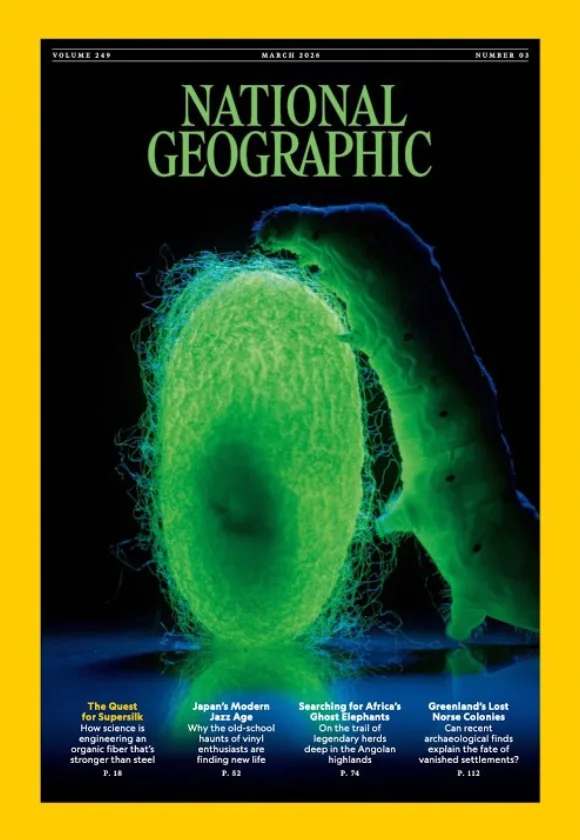
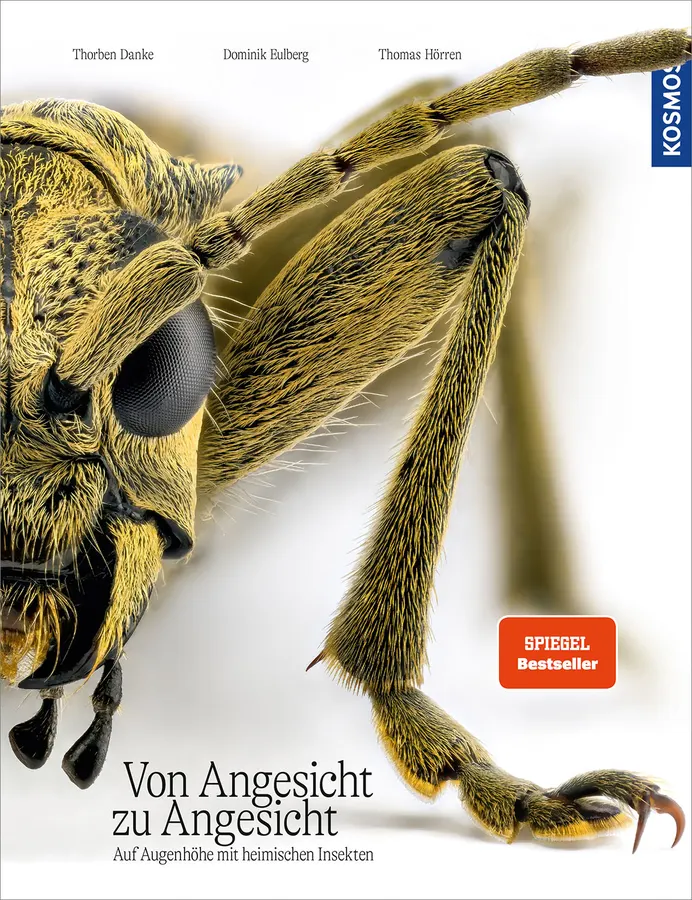
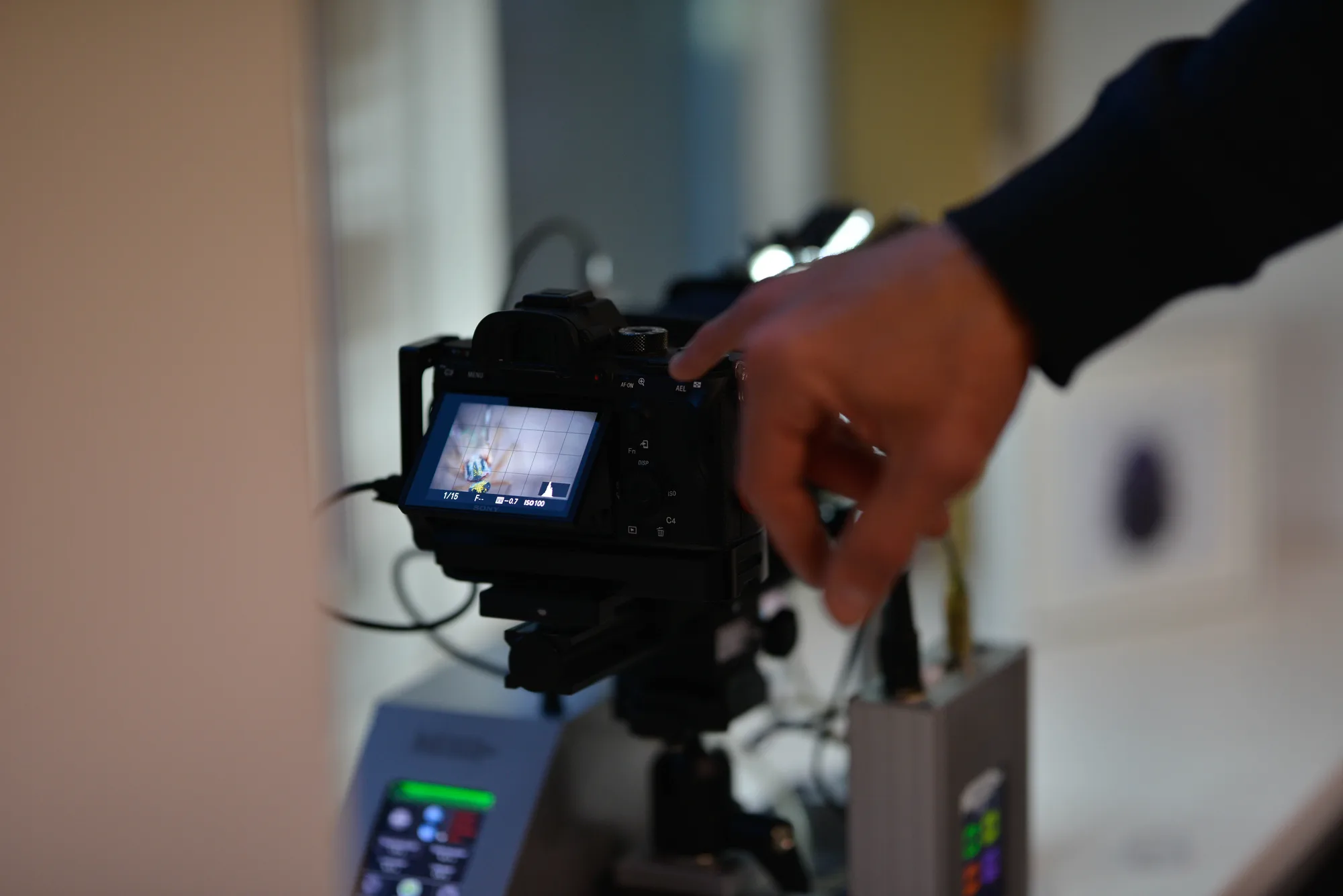
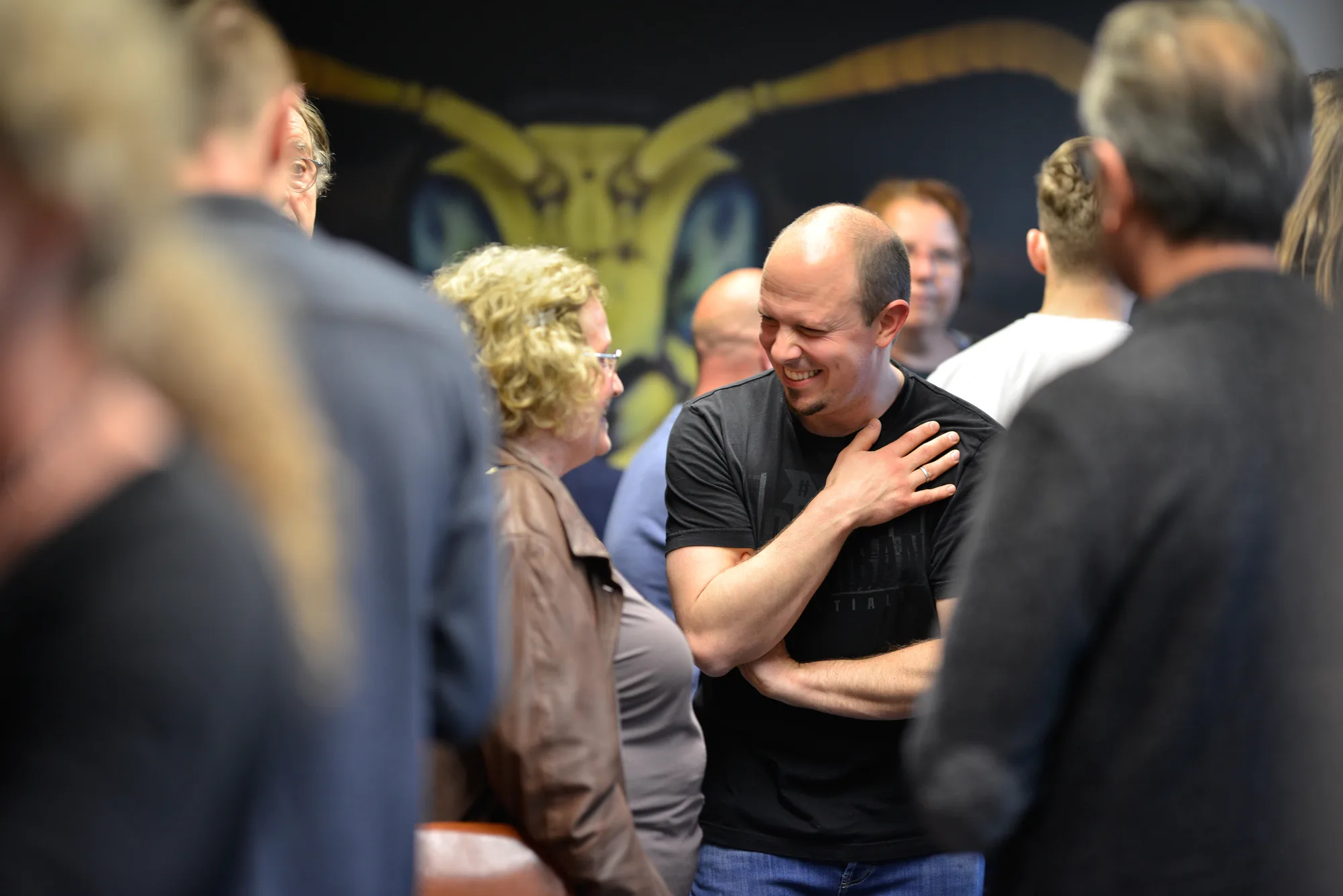
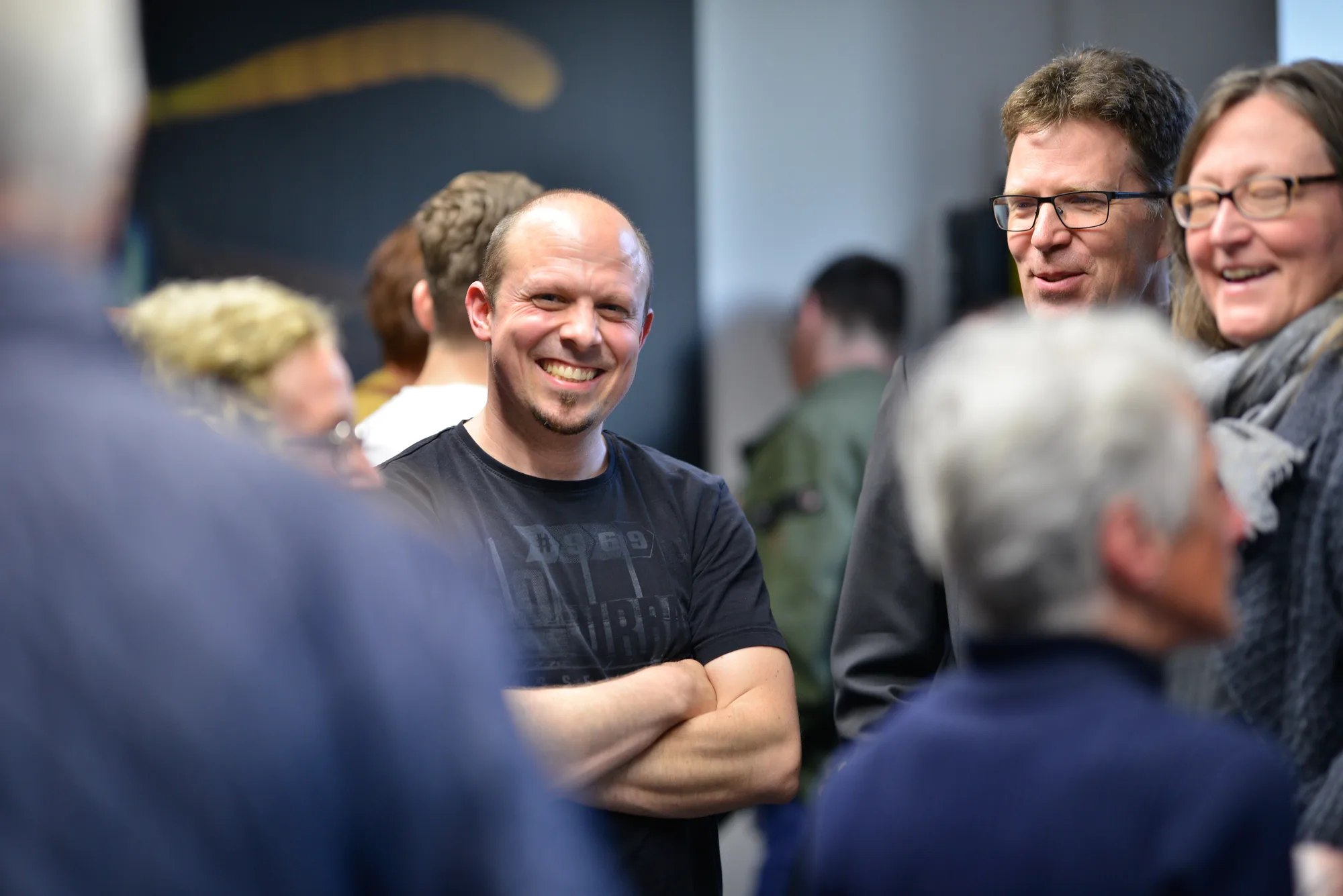
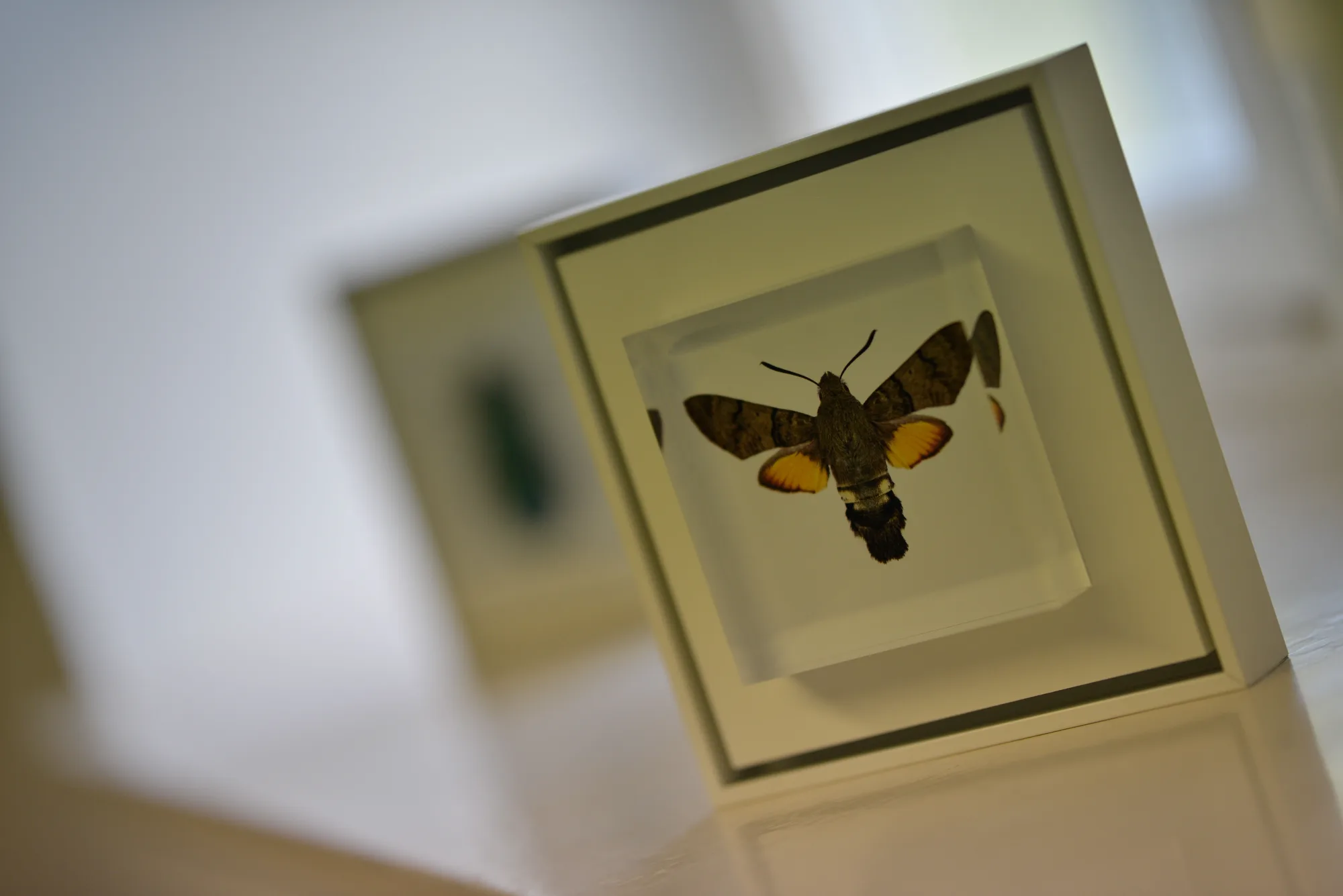
In September 2024 our big insect book was published by Kosmos – a project we spent almost seven years refining. It mattered deeply to us to create not just the hundredth insect book on the market, but something artistic and avant-garde that conveys the overflowing beauty of nature as an artist as well as possible. The multi-award-winning graphic designer Götz Gramlich, a member of the renowned Alliance Graphique Internationale, gave the content a fittingly captivating form.
Across 208 pages we take you into the wondrous world of insects to meet these fascinating creatures eye to eye. Or, as the brilliant Rachel Carson so aptly put it: “The more clearly we can focus our attention on the wonders and realities of the universe about us, the less taste we shall have for destruction.”
A wonderful project: produced by Steven Spielberg, Darryl Frank and Justin Falvey and narrated by Morgan Freeman – from the Emmy-winning creators of “Our Planet”.
The eight-part series tells how life on our planet began and evolved. A single episode uses more than 40,000 of my images. You can see the result in the insect episode, “Invasion of the Land” (episode 3).
Rheinwerk Verlag
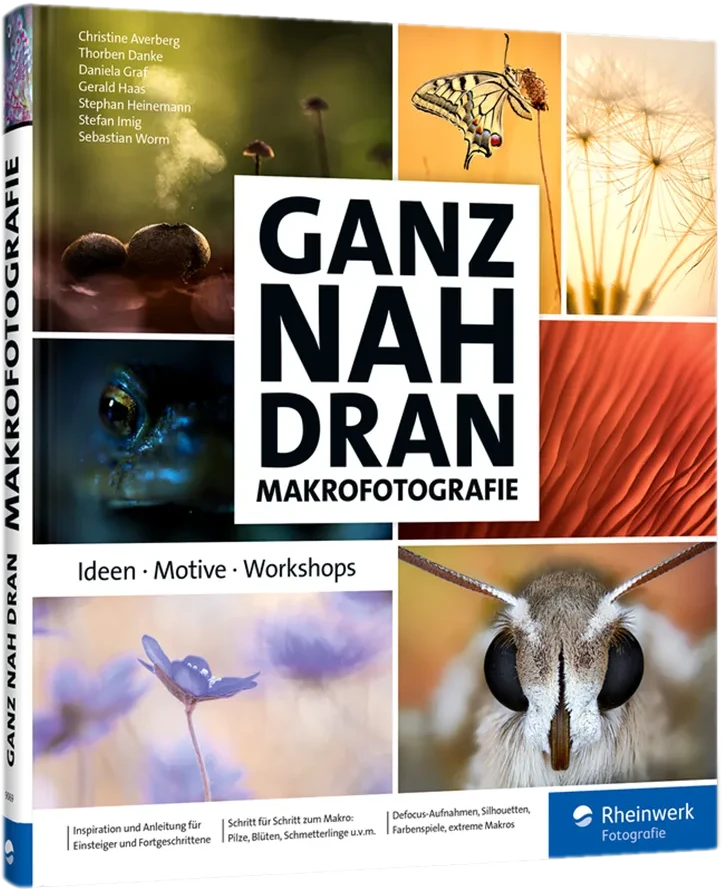
Ganz nah dran
“Ganz nah dran” (Up close) is a book on macro photography that I created together with six other photographers – full of ideas, subjects and workshops.
For my debut as an author I took the opportunity to write the book I would have wished for when I started extreme macro photography in 2016: a book that makes getting started easier. Which lenses can I use? How do I adapt them? Where do I find insects, and how do I clean them? You will find answers to these and many more questions in the book.
Available (in German) from Amazon or directly from Rheinwerk.
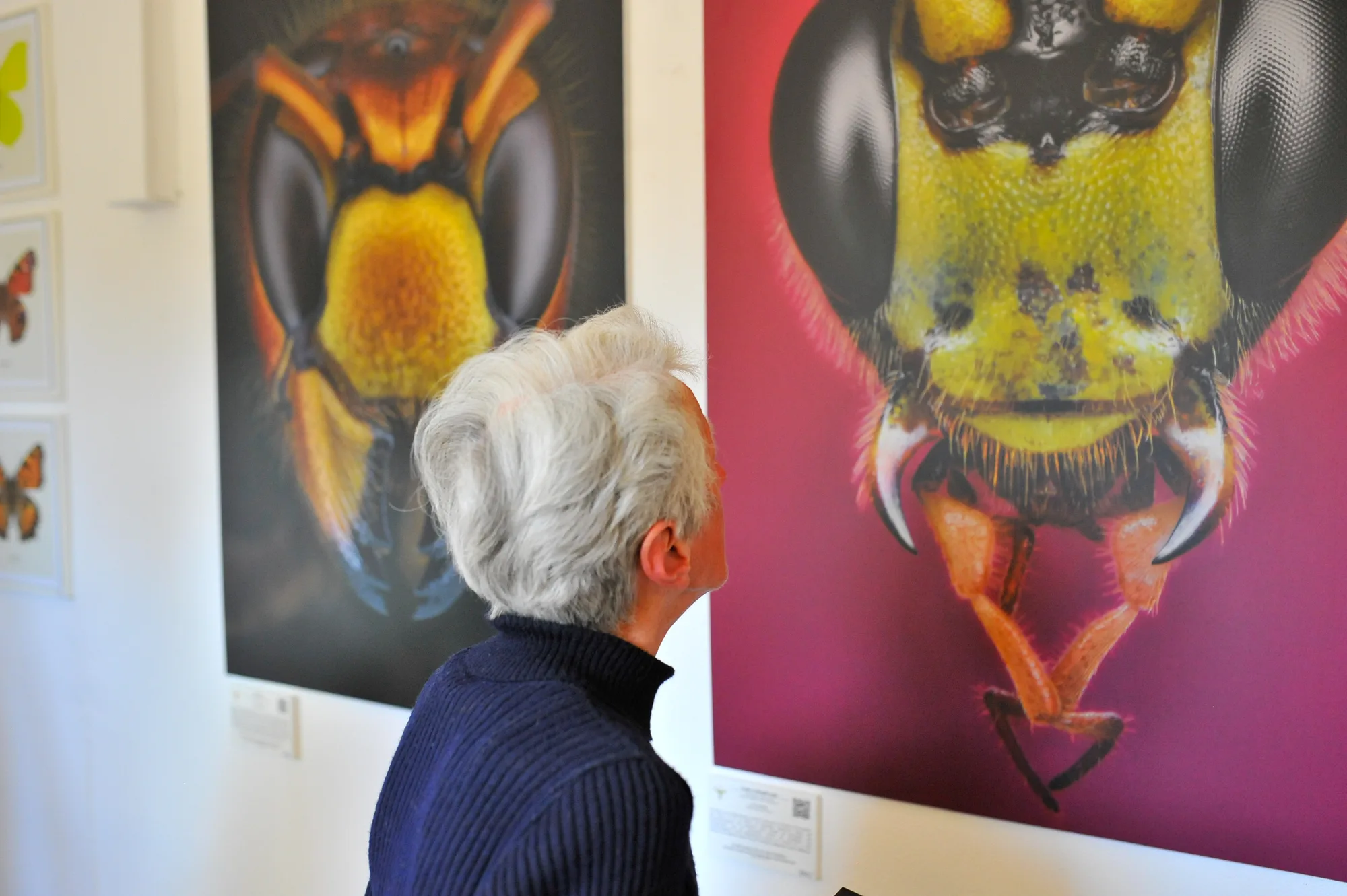
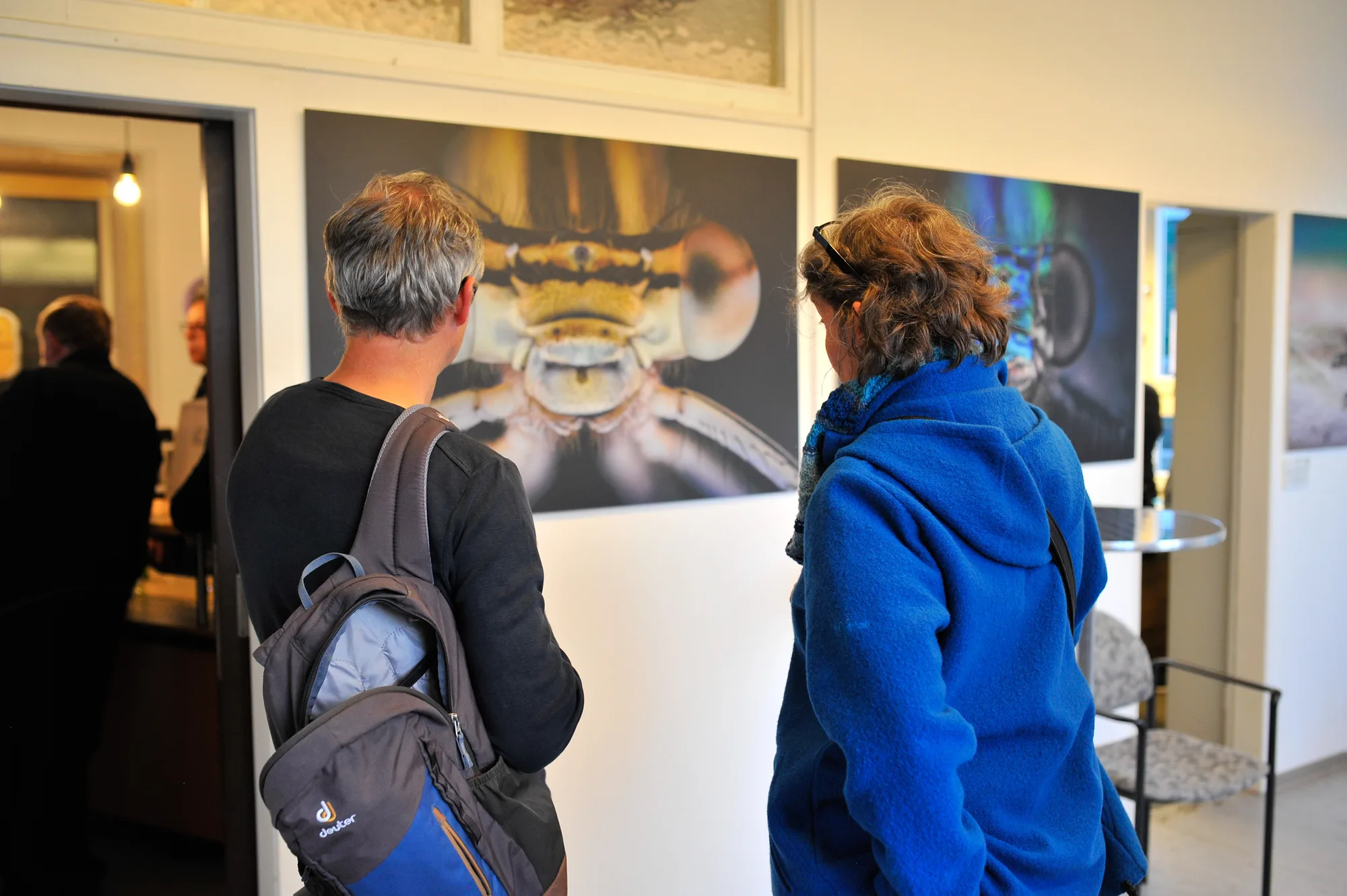
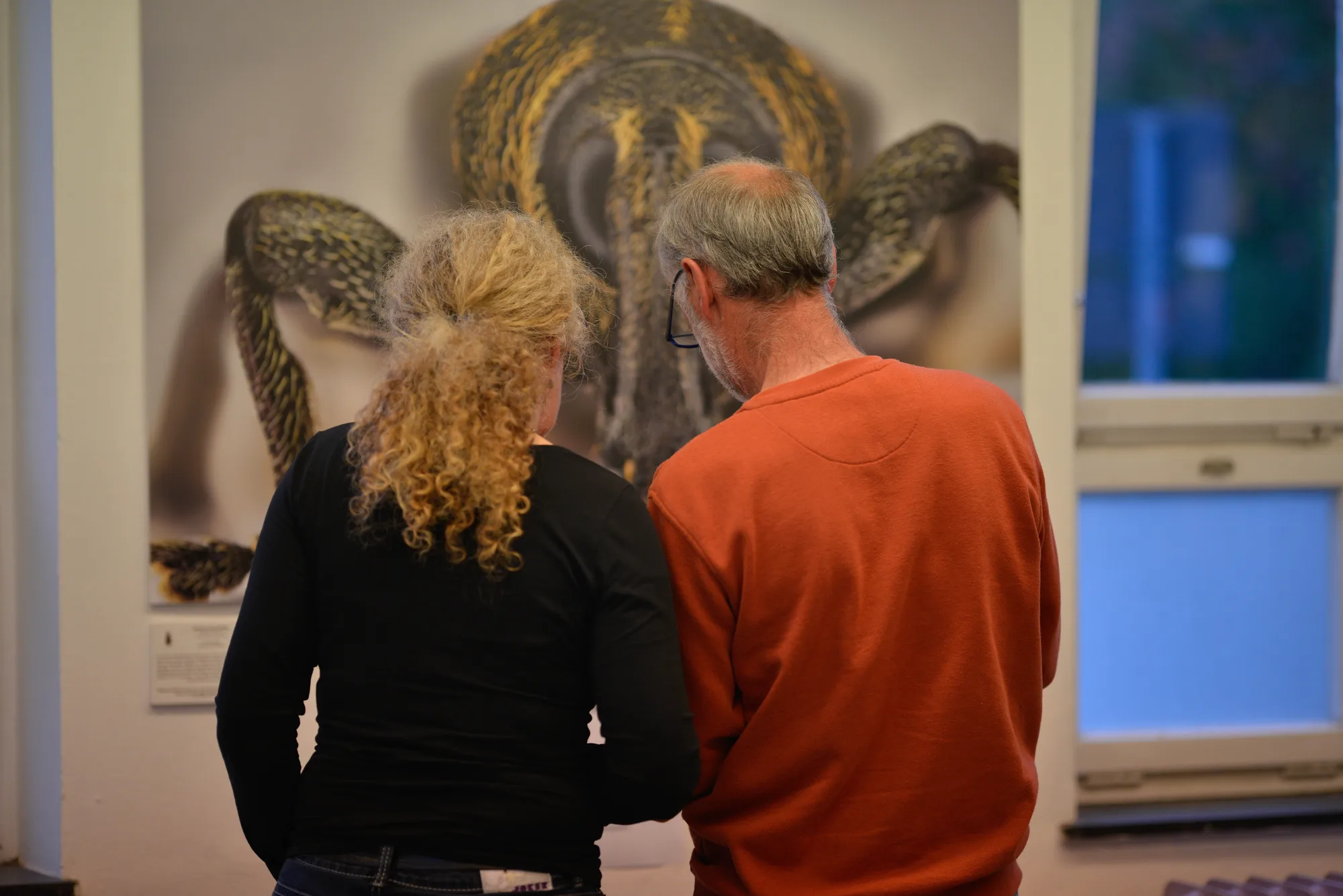
Impressions from the exhibition
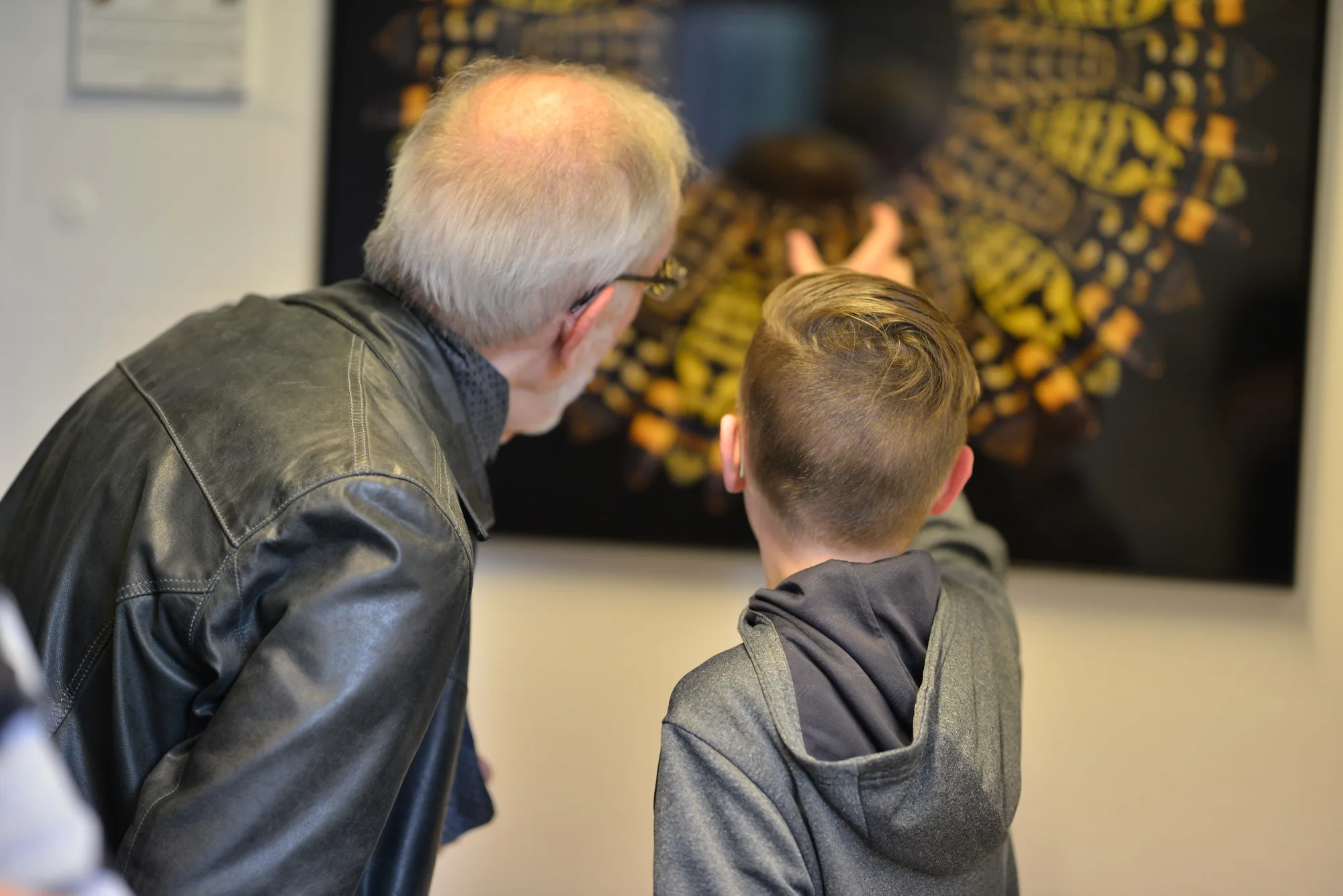
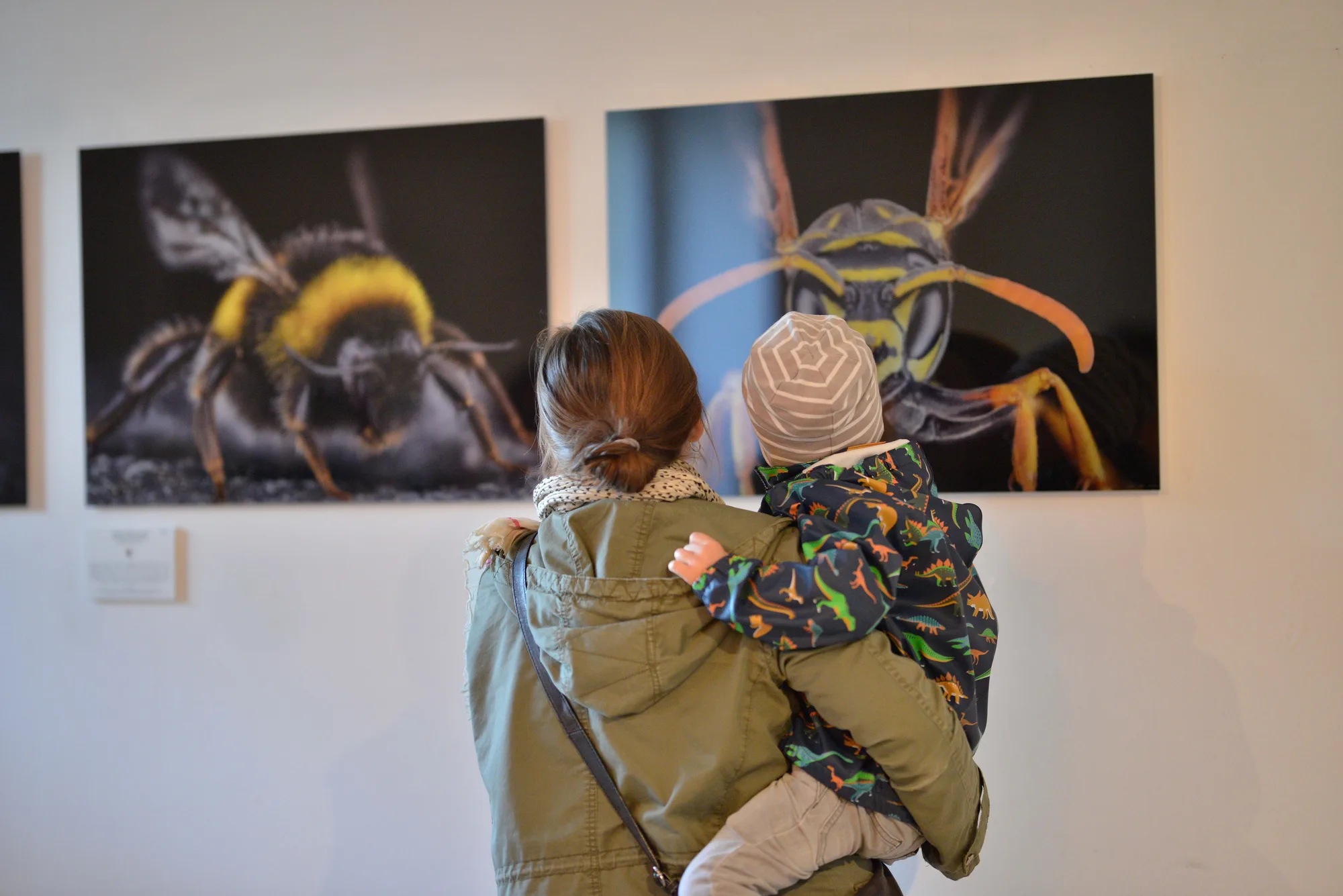
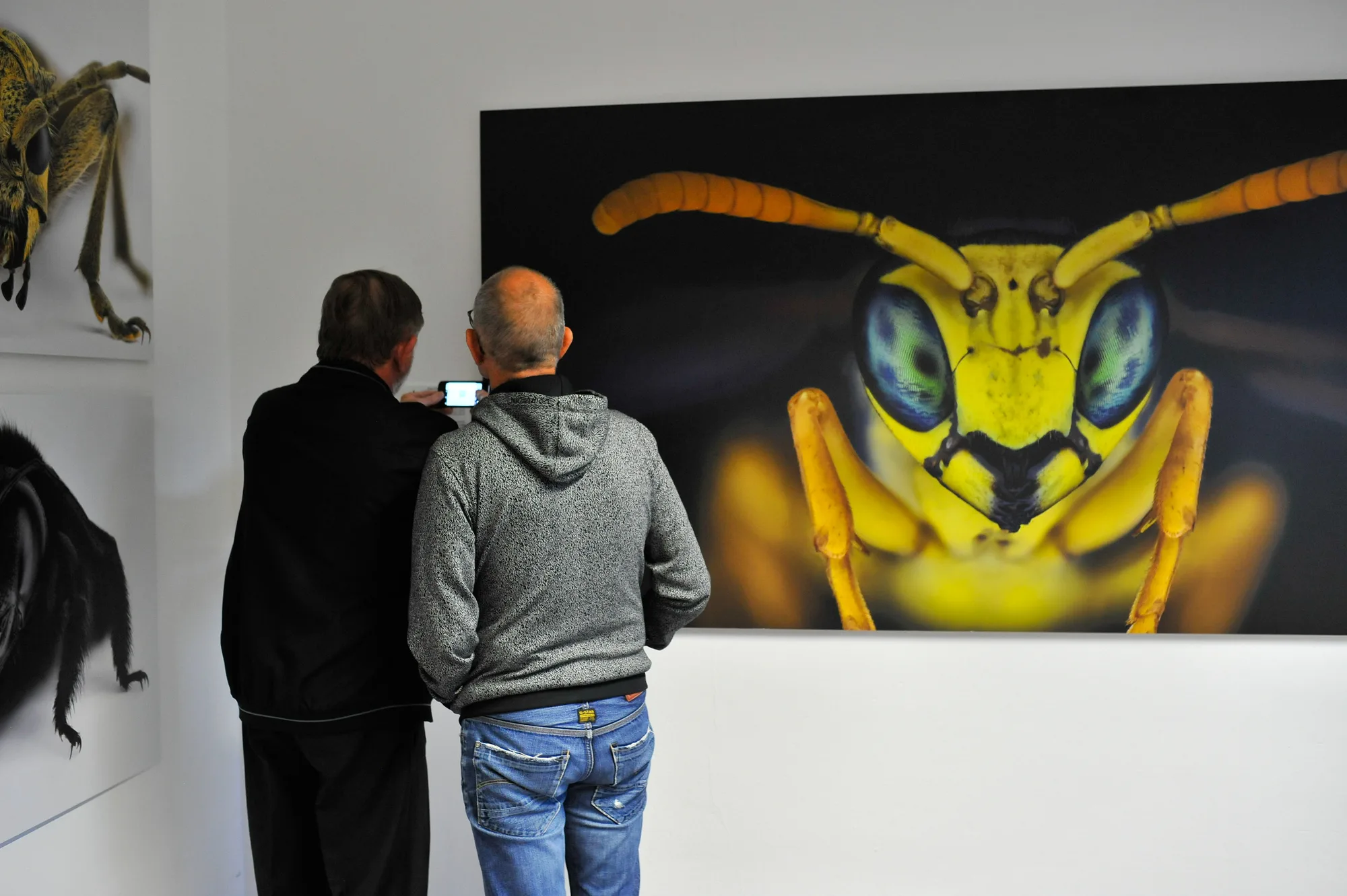
Large-format prints at eye level with the visitors.
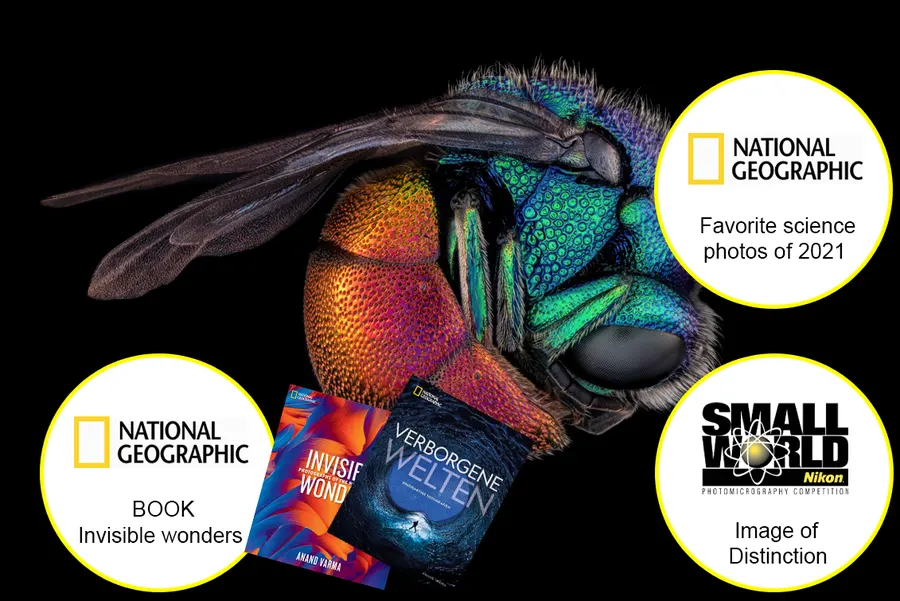
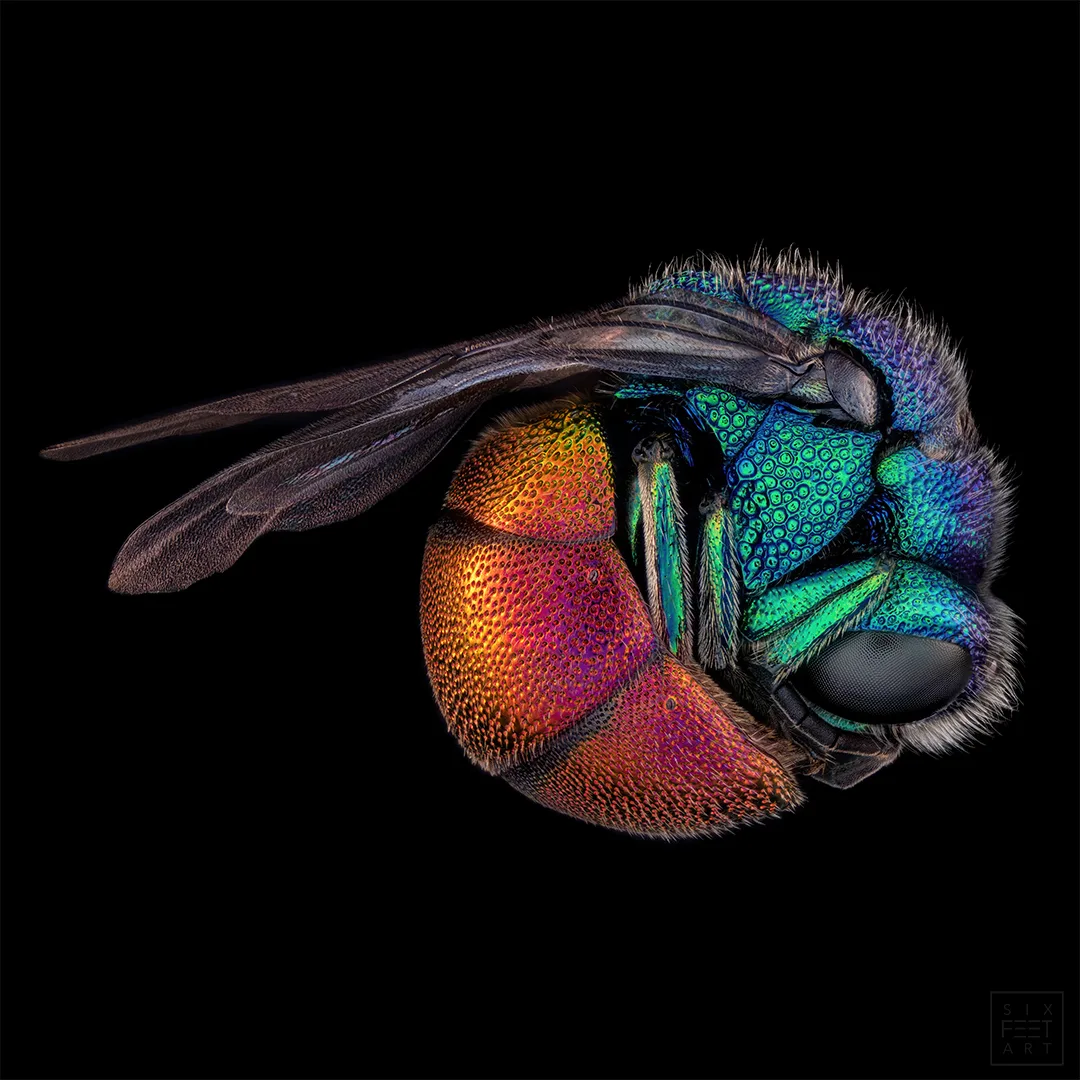
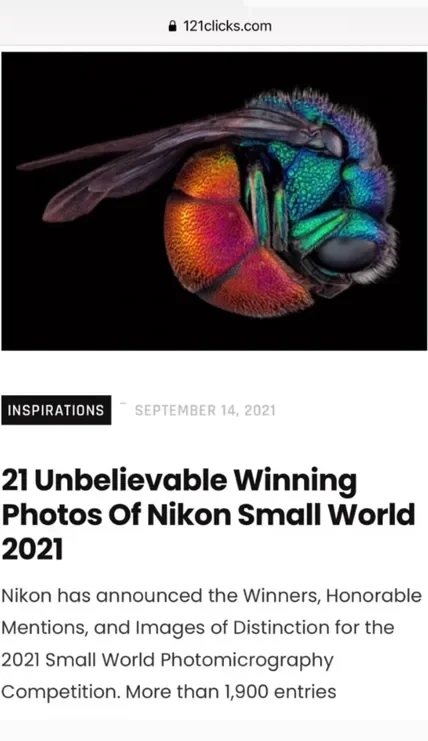
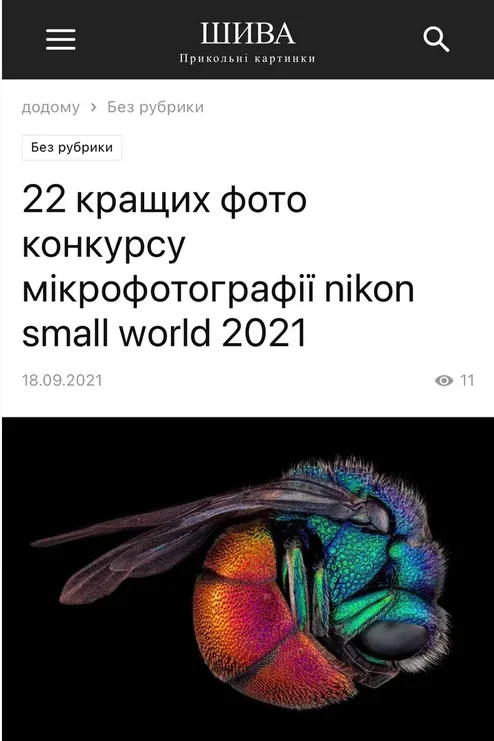
After being selected for the top 100 of Nikon Small World, the little cuckoo wasp travelled around the globe within just a few days.
Berlin
Eye to Eye – Insect Portraits
The exhibition “Auge in Auge – Insektenporträts” (Eye to Eye – Insect Portraits) was shown from 5 to 12 August at the Reinbeckhallen in Berlin. Find out more about the initiative at save-the-future.org.
Collaboration with Robert Balke
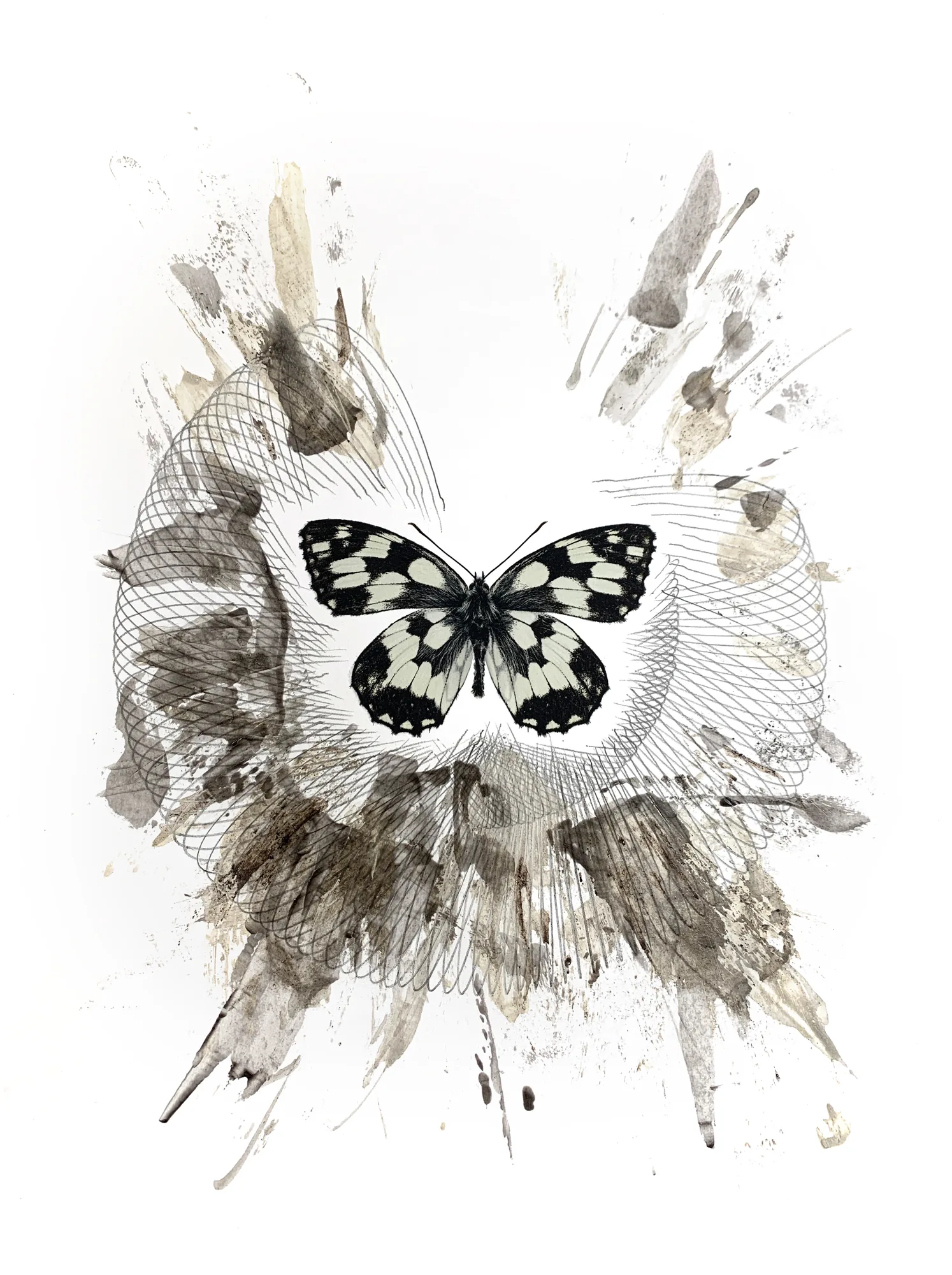
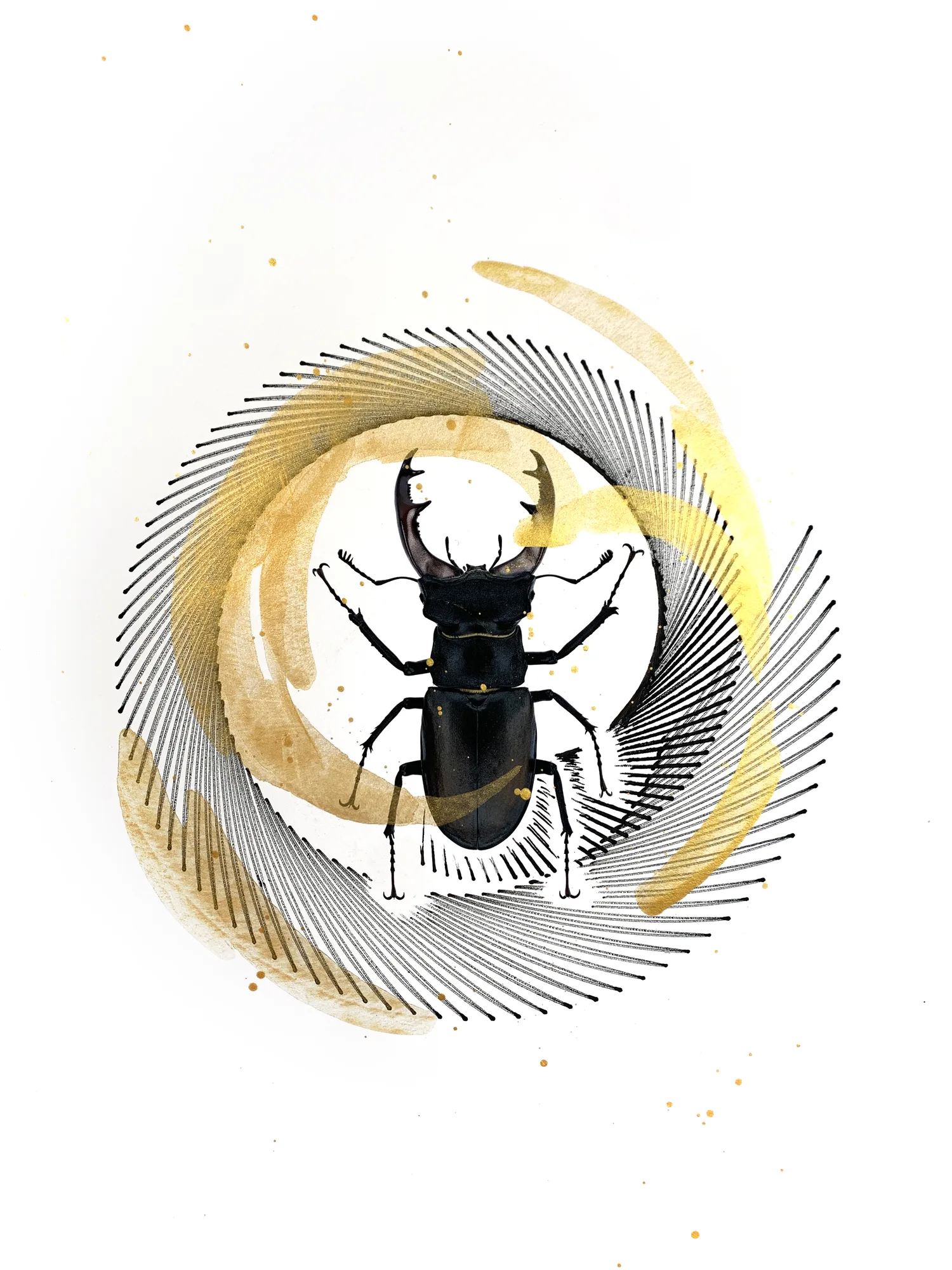
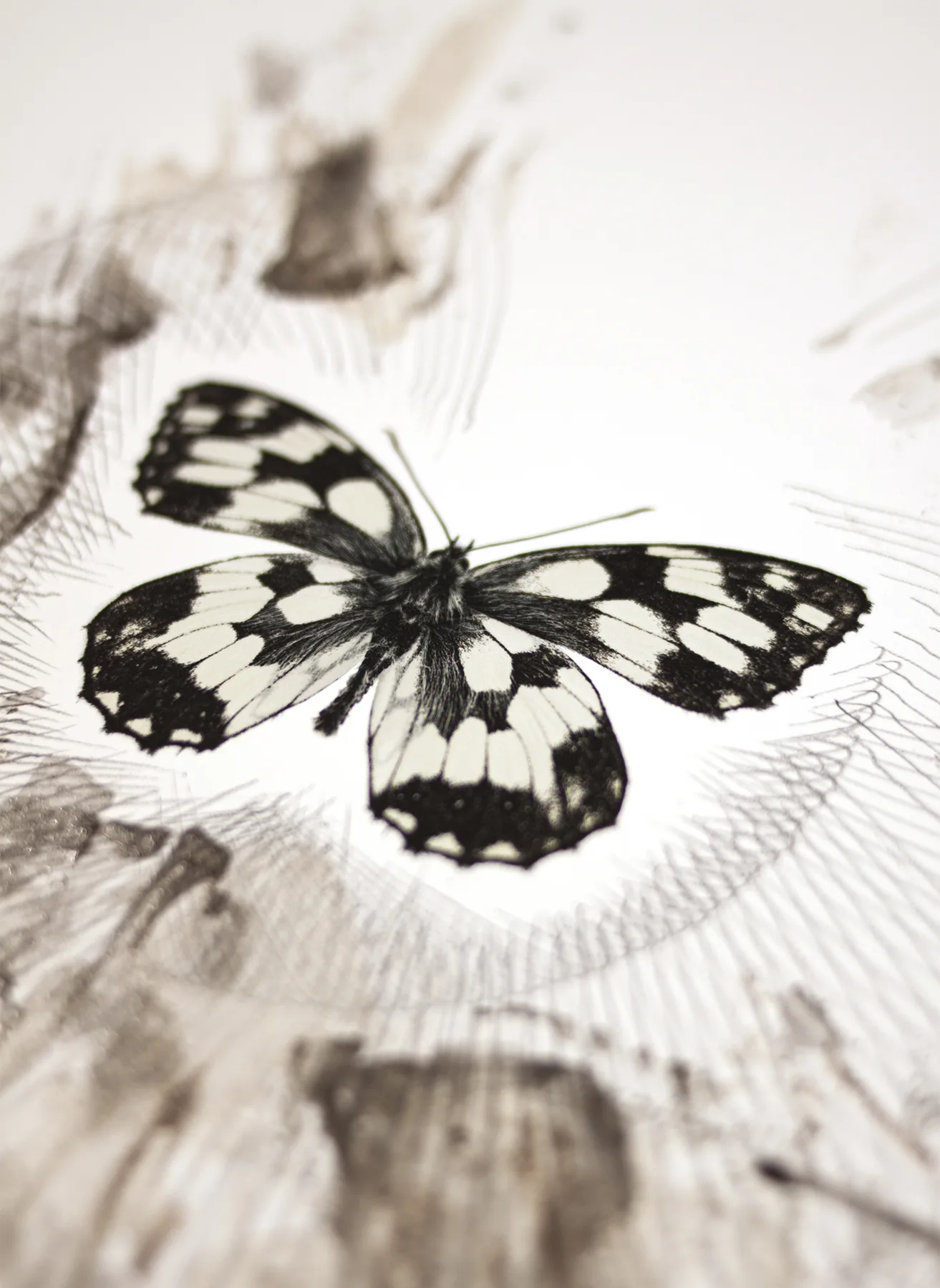
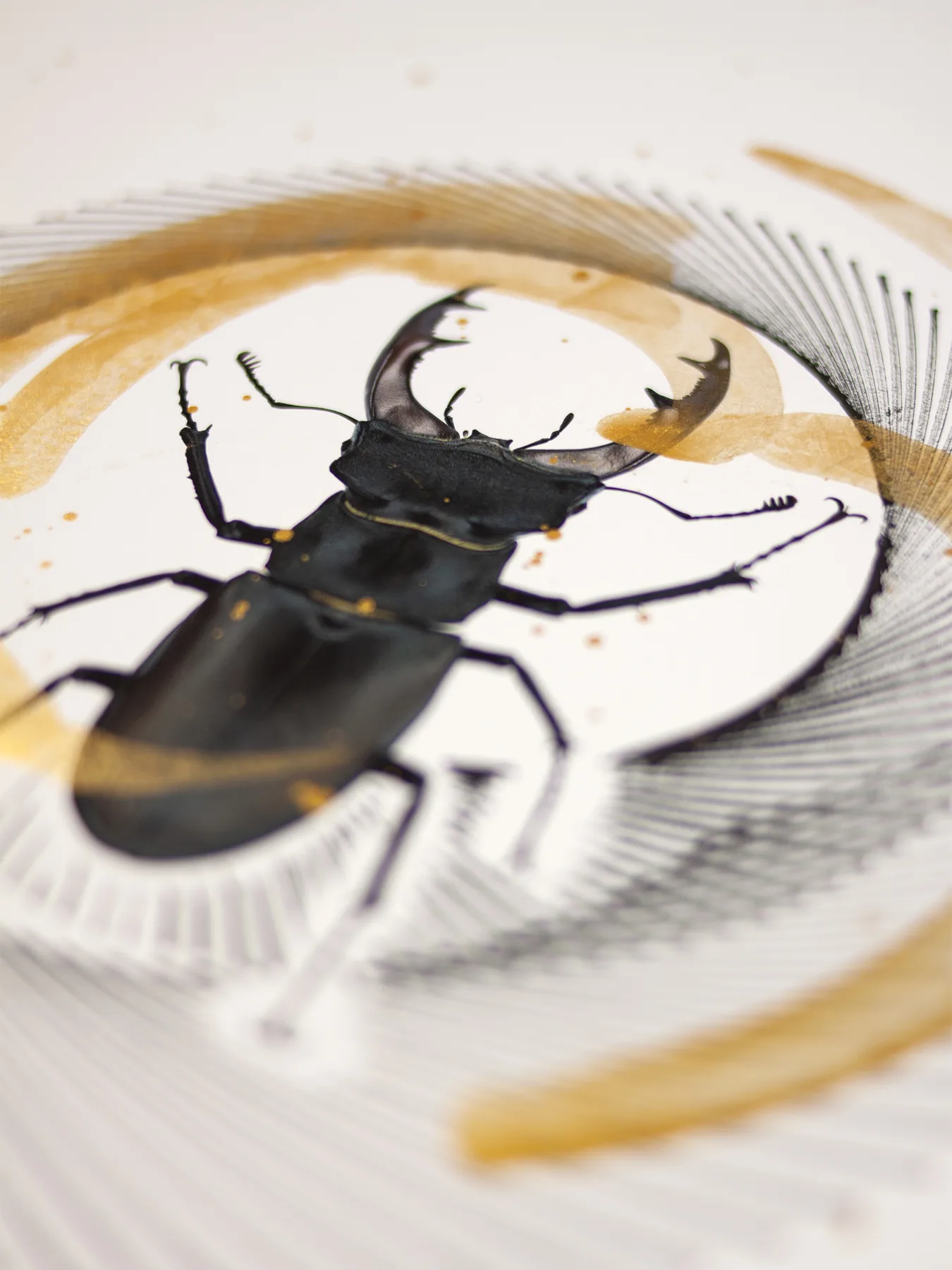
High-resolution pigment prints on 100% cotton paper meet Robert Balke’s drawing machines. These one-of-a-kind pieces can be ordered in the shop at robertbalke.de.
The four megadiverse insect orders
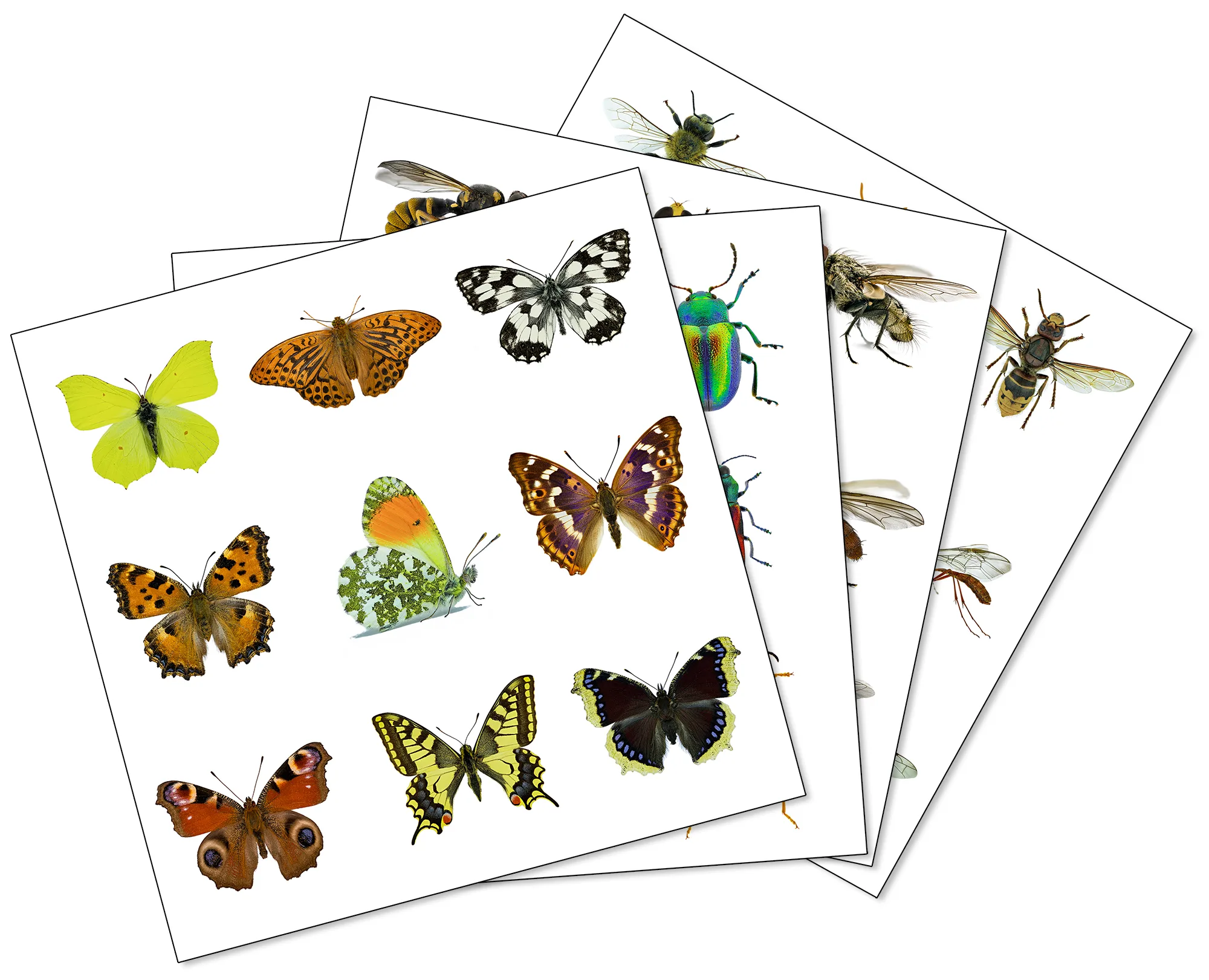
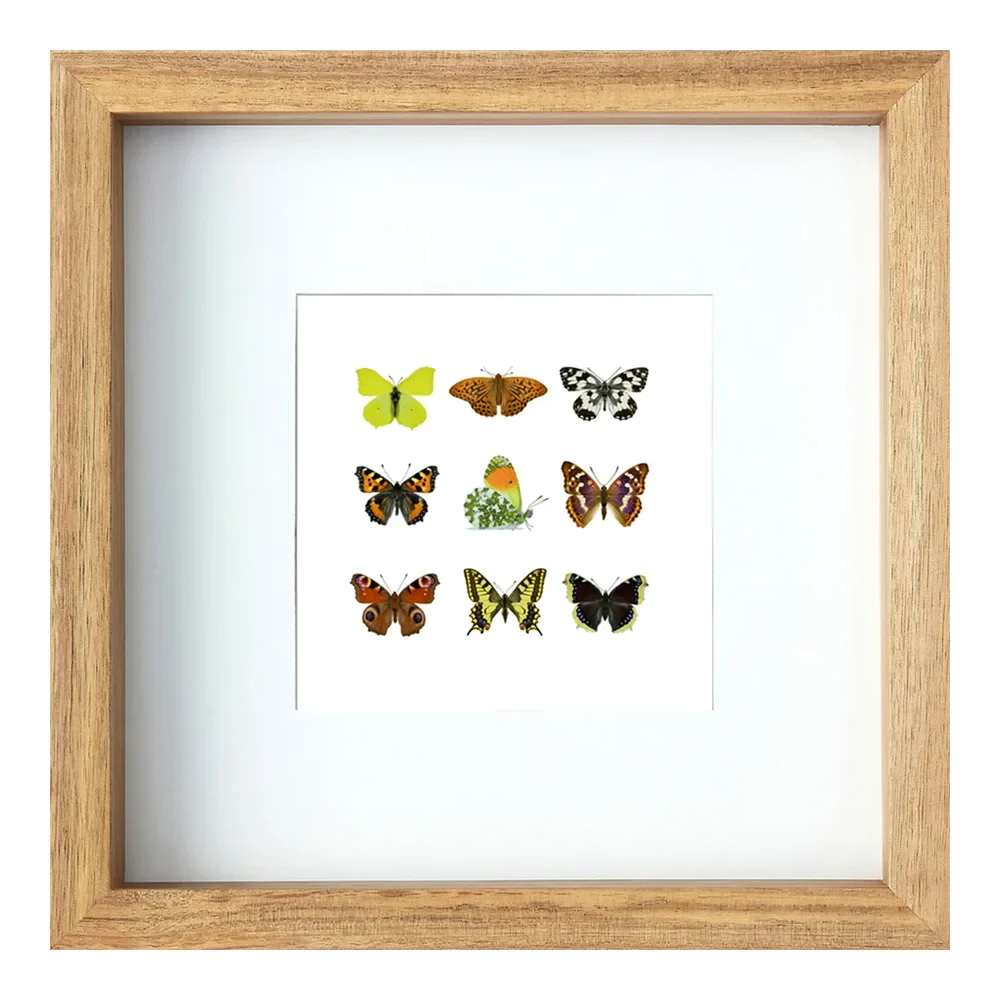
Coleoptera (beetles), Lepidoptera (butterflies and moths), Diptera (true flies) and Hymenoptera (bees, wasps and ants) contain 90% of all described insect species. My stickers show a selection of nine species from each order. The 10×10 cm stickers are printed on a special matte finish that noticeably enhances their look and feel. Mounted in frames with a passe-partout they make a great collage with a fascinating background. Standard IKEA frames such as Ribba, Hovsta, Knoppäng or Sannahed fit perfectly.
These stickers come FREE with every order placed here on my website or in my Etsy shop. They cannot be ordered individually.
SWR “natürlich”
The SWR TV magazine “natürlich” visited me at home towards the end of the outdoor macro season. The result is this short report (in German).
@makrotalk, the macro photography podcast (in German). We would like to share our journey, our technique and our experience, and would be delighted if you tuned in. Available on all major podcast platforms (Apple Music, Spotify…) and directly on Libsyn. To go with the podcast we have launched an Instagram channel to keep you up to date.
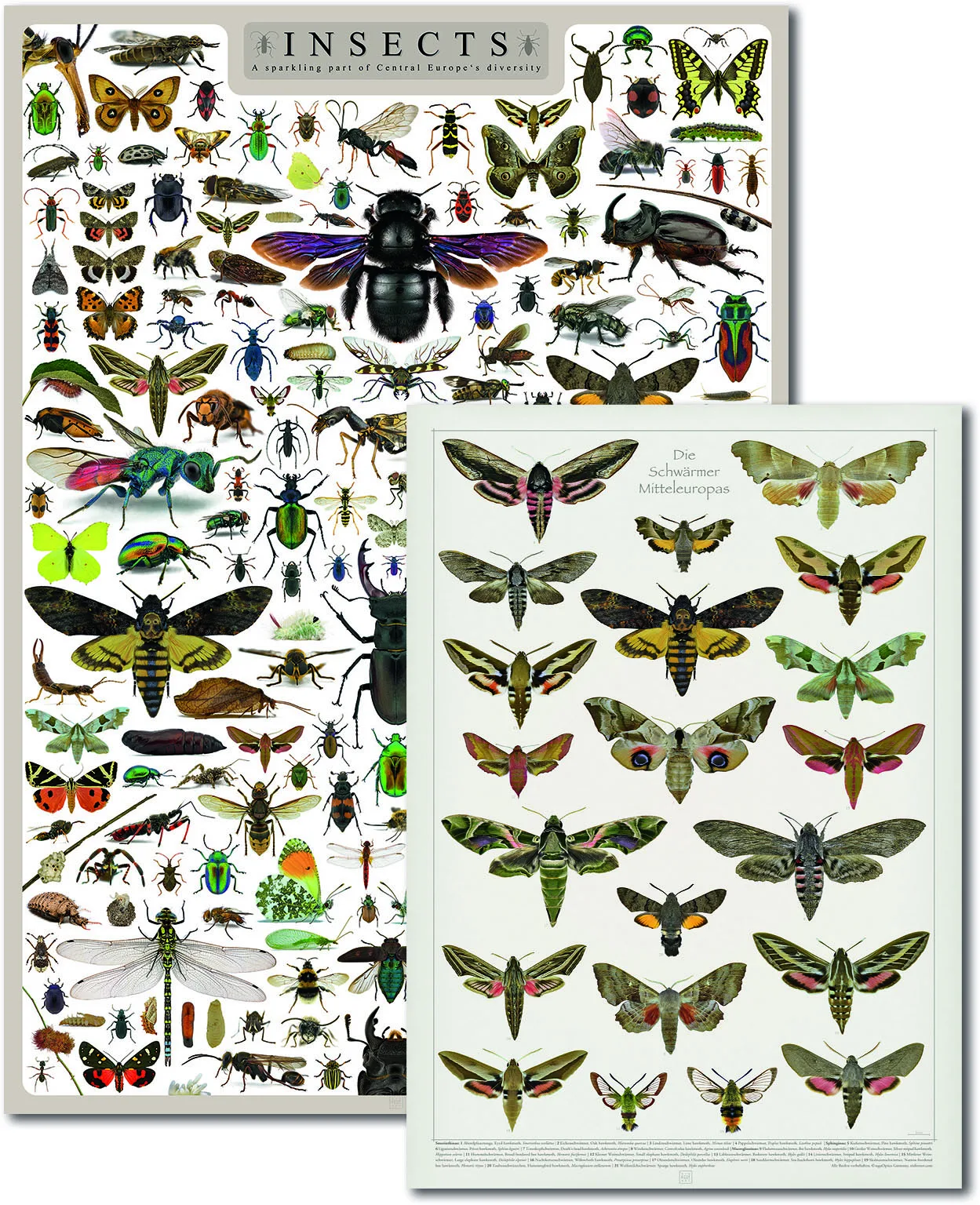
Two posters
A revised version of the giant insect poster with more than 80 new insects in A0, and the poster “The Hawk-moths of Central Europe” in A1.
You can find both posters in my shop and in my Etsy shop.
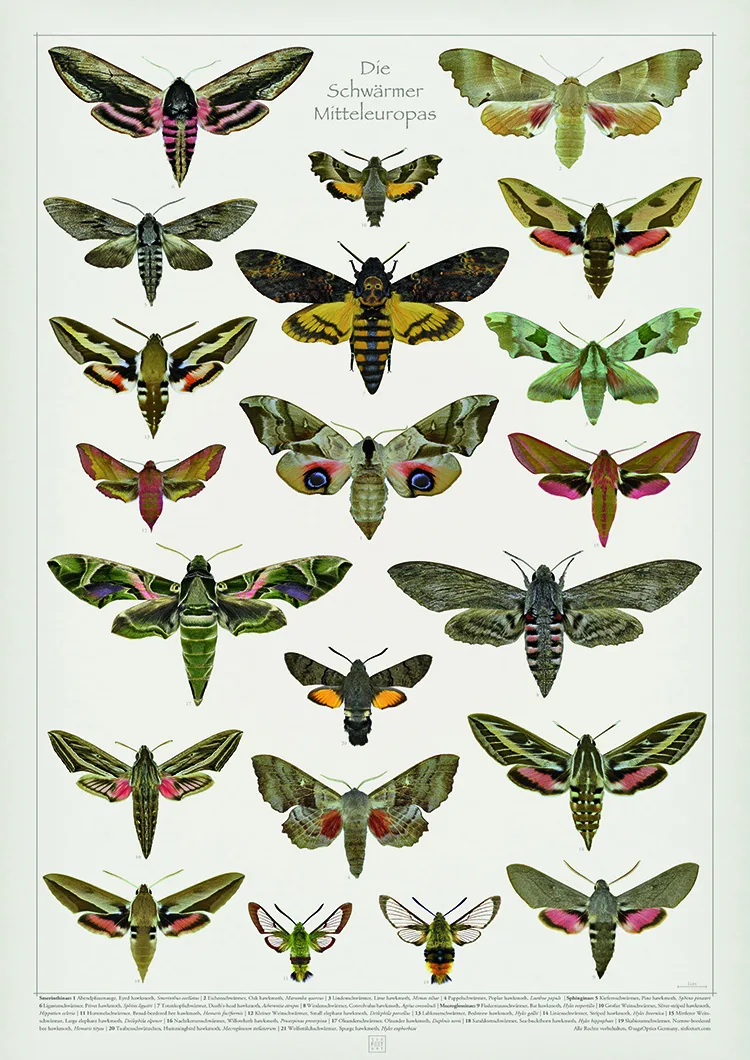
The hawk-moth poster
The discreetly numbered hawk-moths can be identified quickly and easily using the key. View the poster
The Hawk-moths of Central Europe – teaser
After almost two years of work, a new poster was born: “The Hawk-moths of Central Europe” shows all 21 hawk-moth species that can be observed in Central Europe. This short teaser offered a first glimpse.
The MAKROTALK podcast
Mark and I launched the MAKROTALK podcast. Mark wanted to work more in the studio, I wanted to shoot more macro outdoors – so it made sense to talk about it and record our conversations. That was the idea. But why not broaden it and cover the whole range of macro photography? And since there was no German-language macro podcast yet … bang, here it is!
We hope to offer you information and entertainment. You can find and listen to it on the usual streaming platforms or directly on Libsyn at makrotalk.libsyn.com. You can also find us on Instagram at instagram.com/makrotalk, with news about the podcast.
arteCONCERT – united we stream
arteCONCERT “united we stream” at Kowalski in Stuttgart. From minute 70 you can enjoy Frischvergiftung’s fabulous projection mapping of my macro images set to Dominik Eulberg’s wonderful music. Enjoy watching and listening!
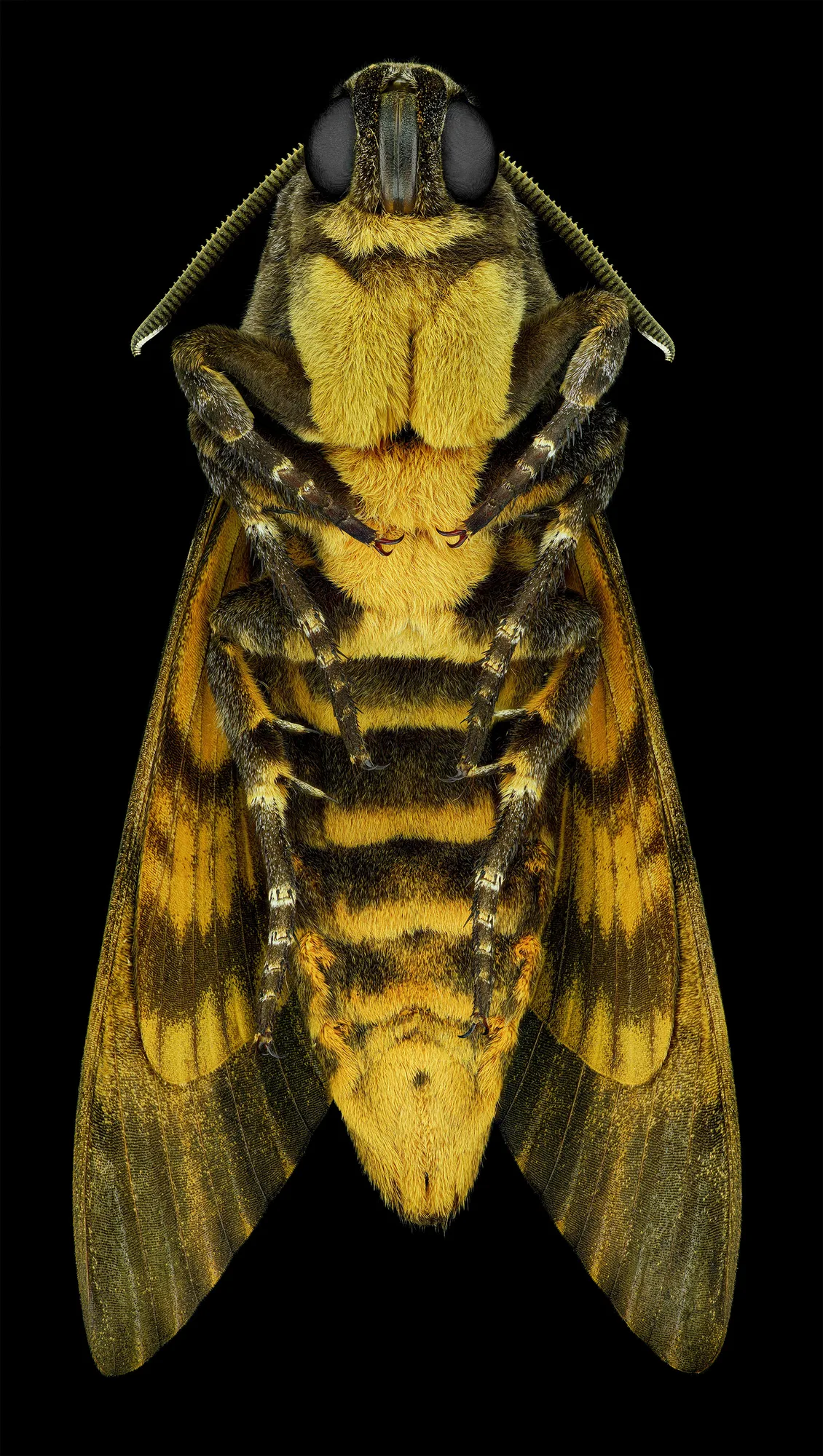
The death’s-head hawk-moth from below
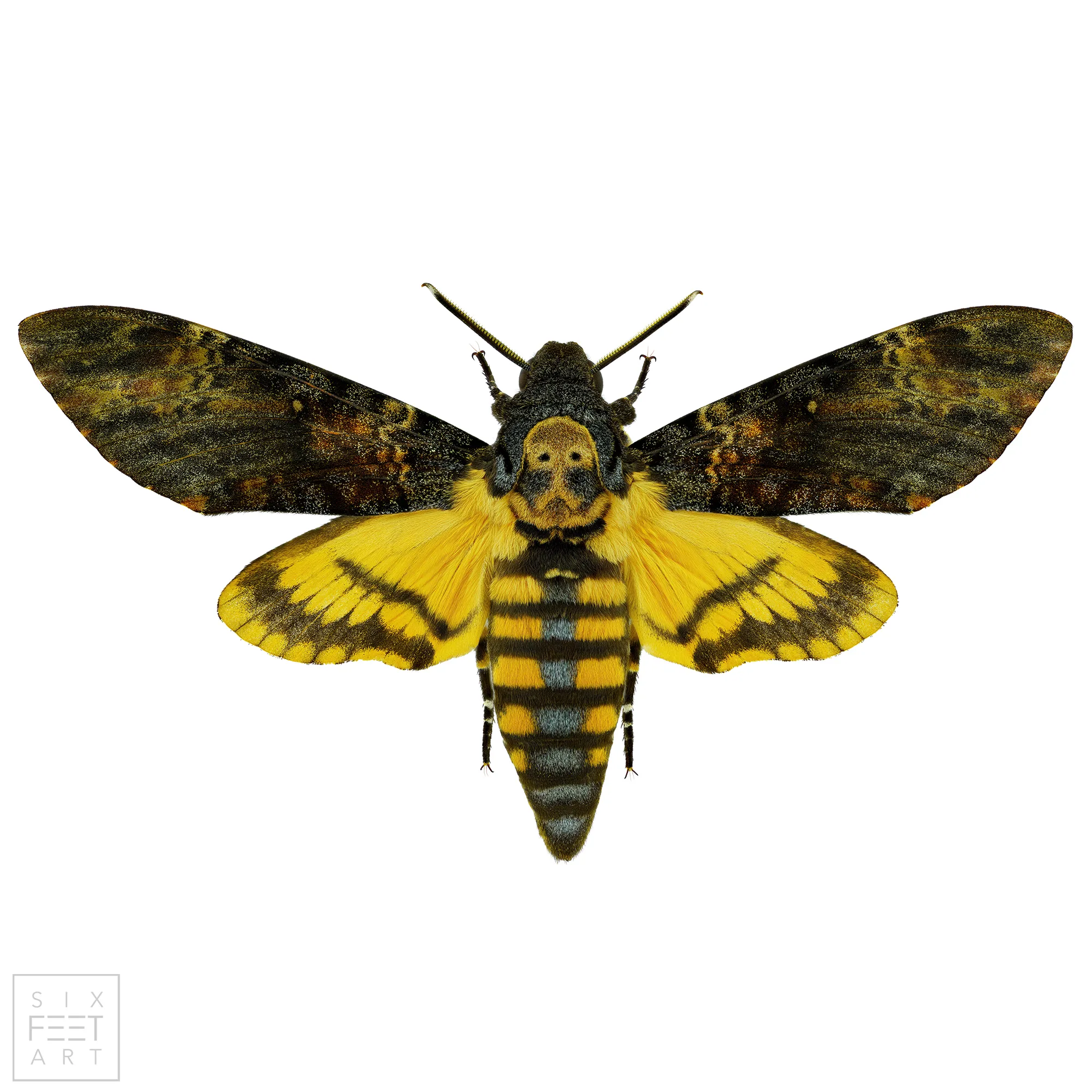
Most people know the famous death’s-head hawk-moth from above – hardly surprising given the markings on its back. But the underside is well worth a look, too.
40:1 with flash
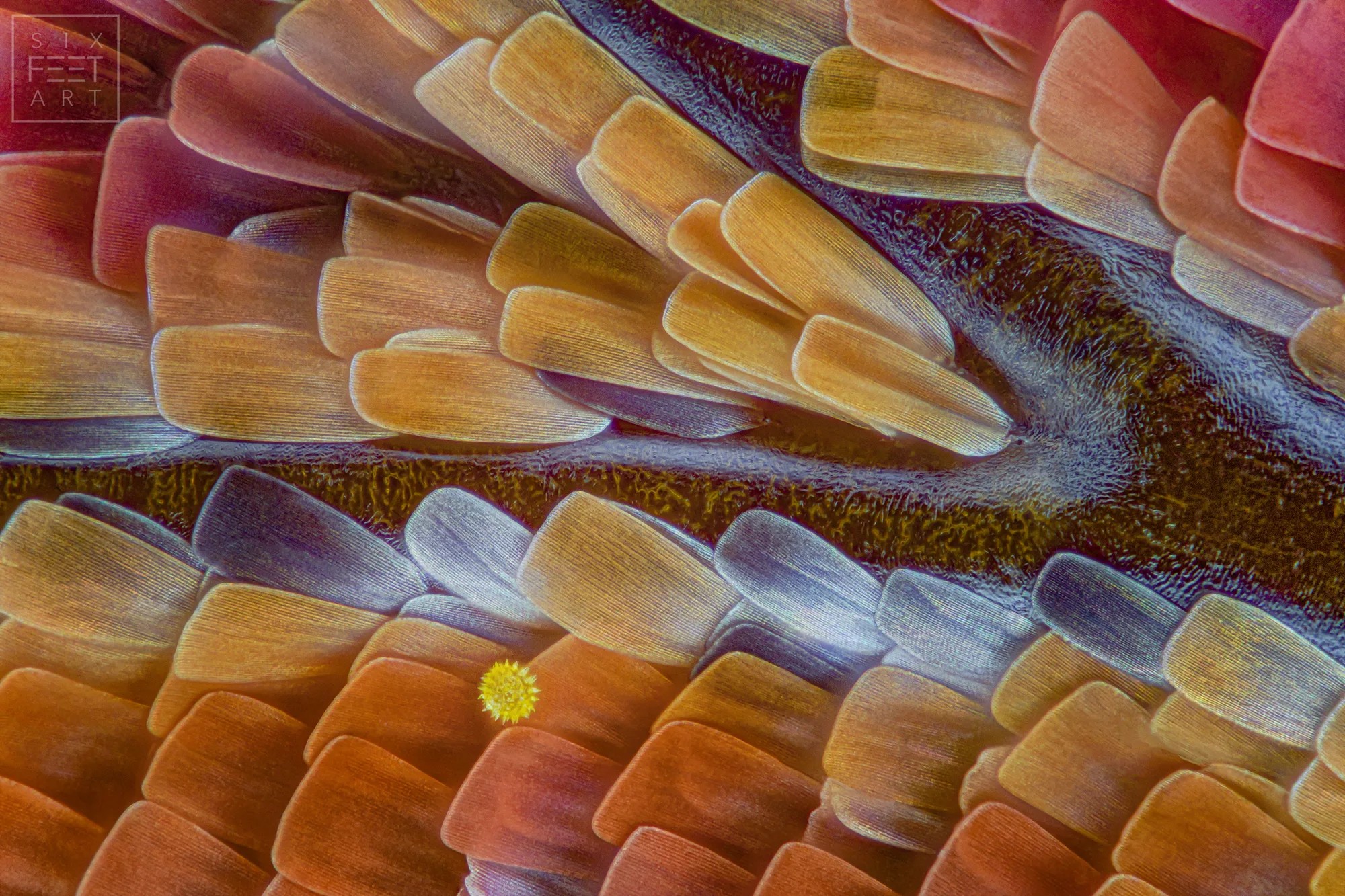
First attempt with the 40:1 objective combined with flash. The image shows the wing scales and veins of a painted lady and a single sunflower pollen grain.
Vierfleck – a project for three
A lovely collaboration between three of us: lovingly coloured scanning electron microscope images paired with Dominik Eulberg’s track “Vierfleck” from his album “Mannigfaltig”.
A change in my lighting technique produces even sharper images at 20:1.
A concrete wall becomes an awareness wall
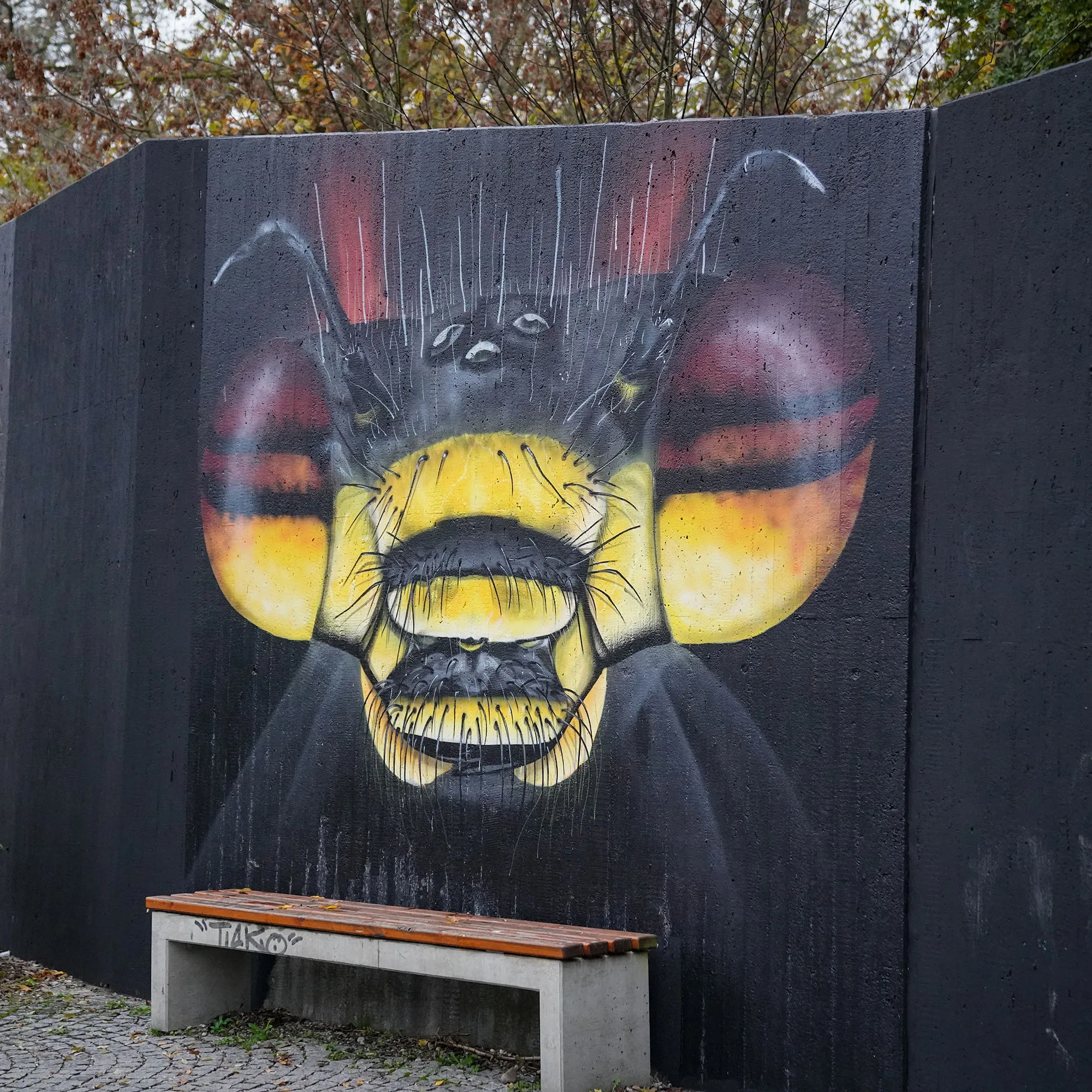
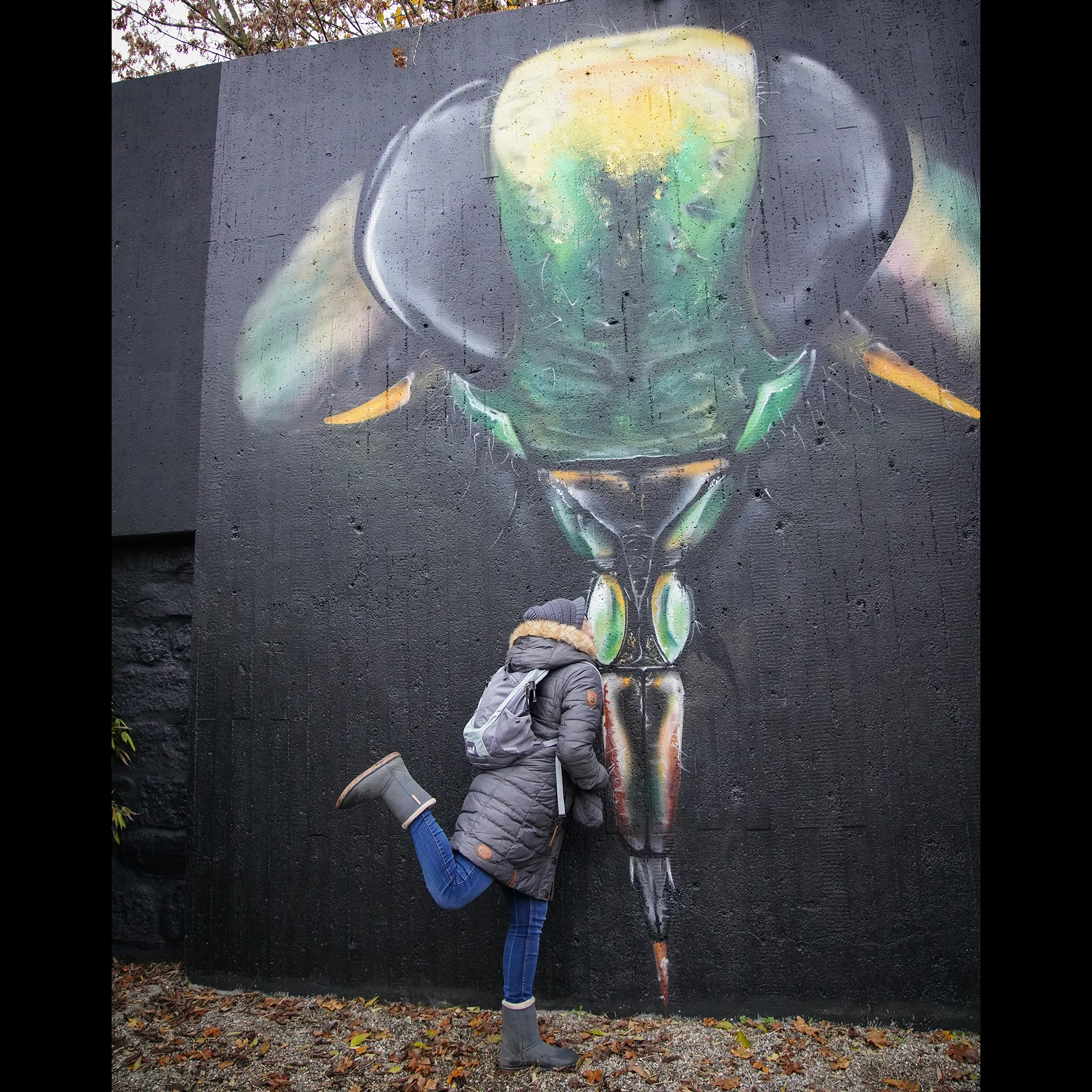
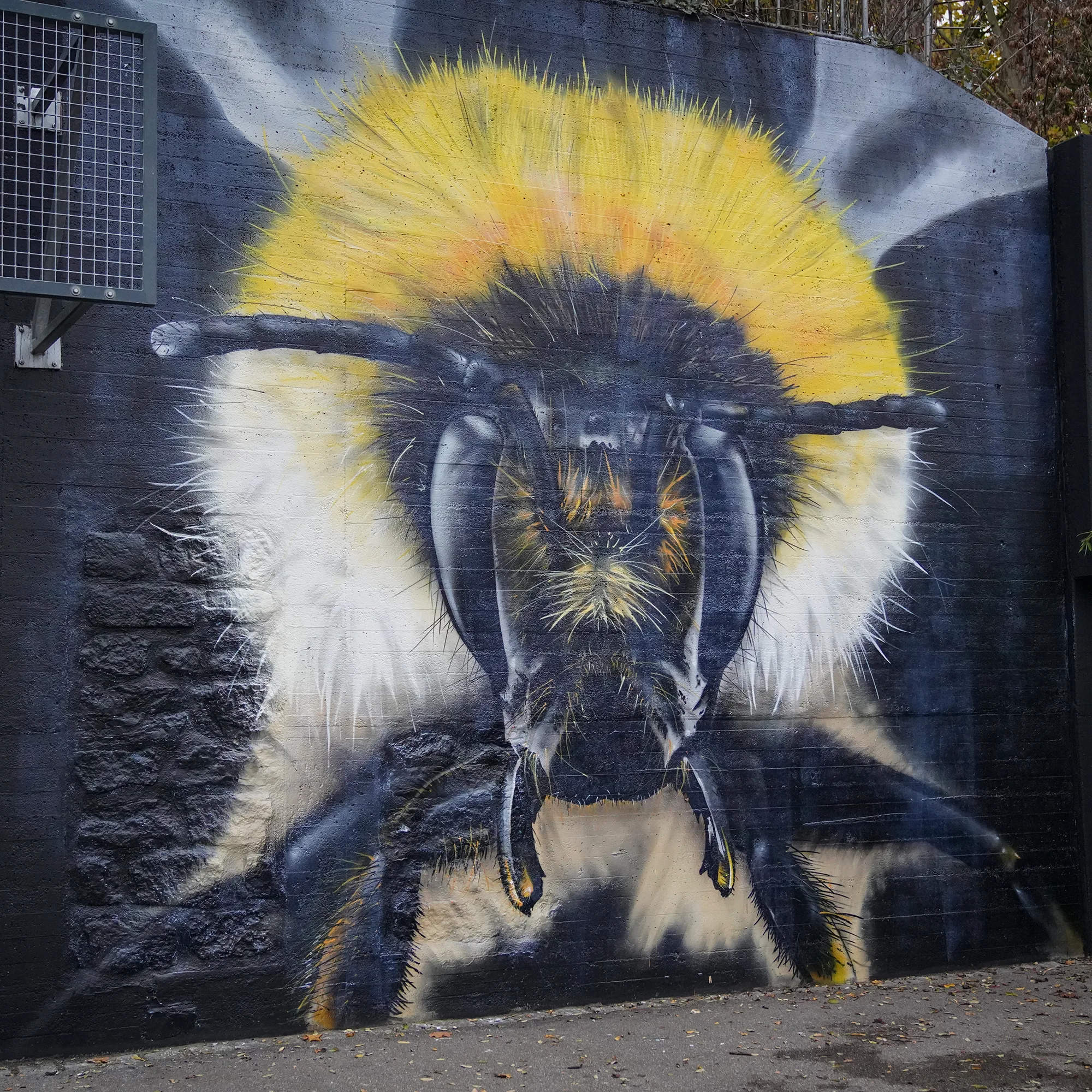
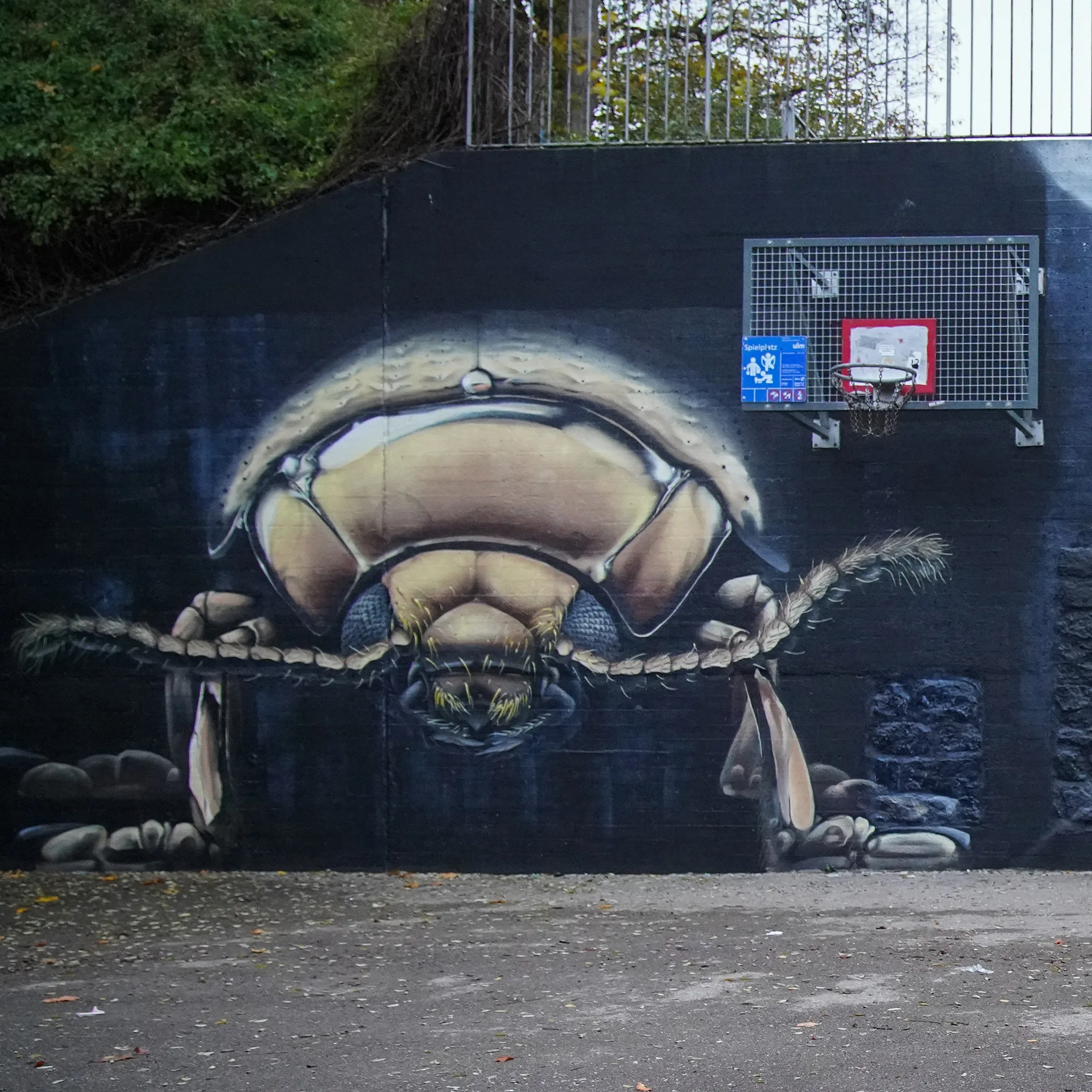
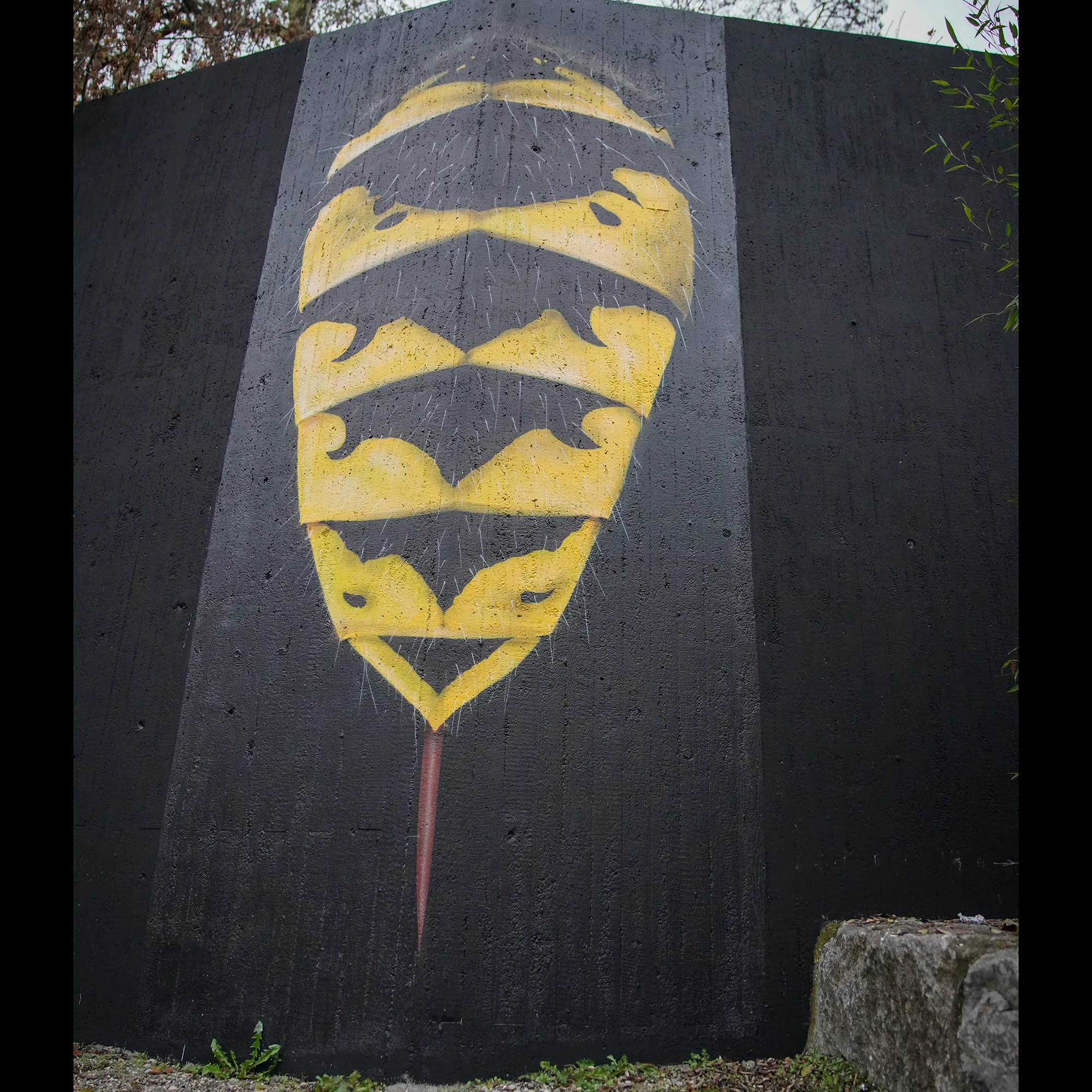
Insects need space! And not only in meadows and forests. They also need room in our minds and in our perception. Awareness is often limited to the popular butterflies and bees. But with almost a million described insect species, there is so much more to be fascinated by. partnersinpaint.de and the city of Ulm realised this wonderful project in Neu-Ulm / Friedrichsau using my images.
The insects were given space: portraits of native species, each 4×4 m. For the templates, 682 single images were taken and combined using focus stacking. 30 litres of wall paint, 150 spray cans, 40 different colours and 30 hours of work went into the project – not to forget the incredible passion every participant brought to make something like this happen.
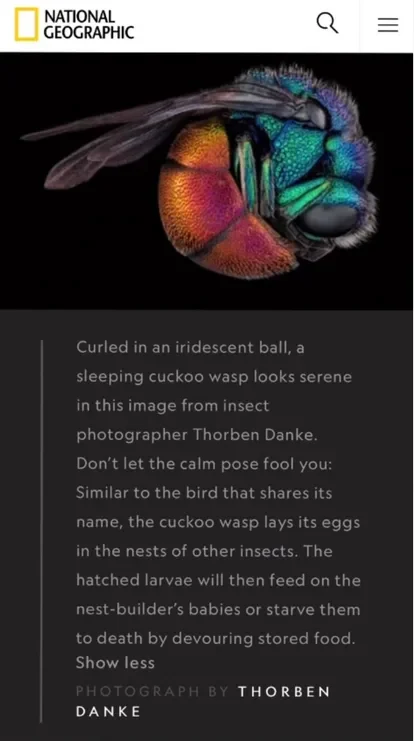
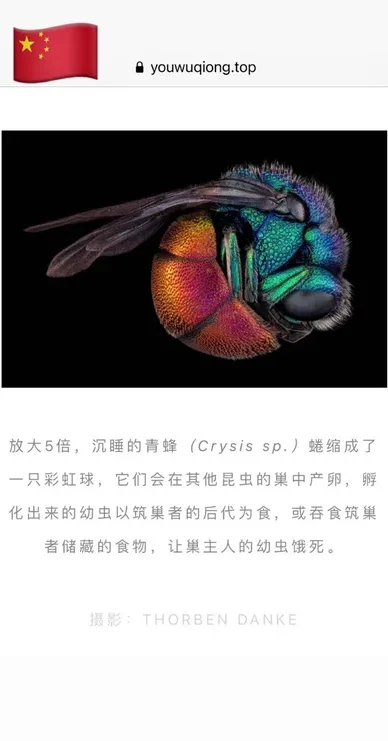
The cuckoo wasp
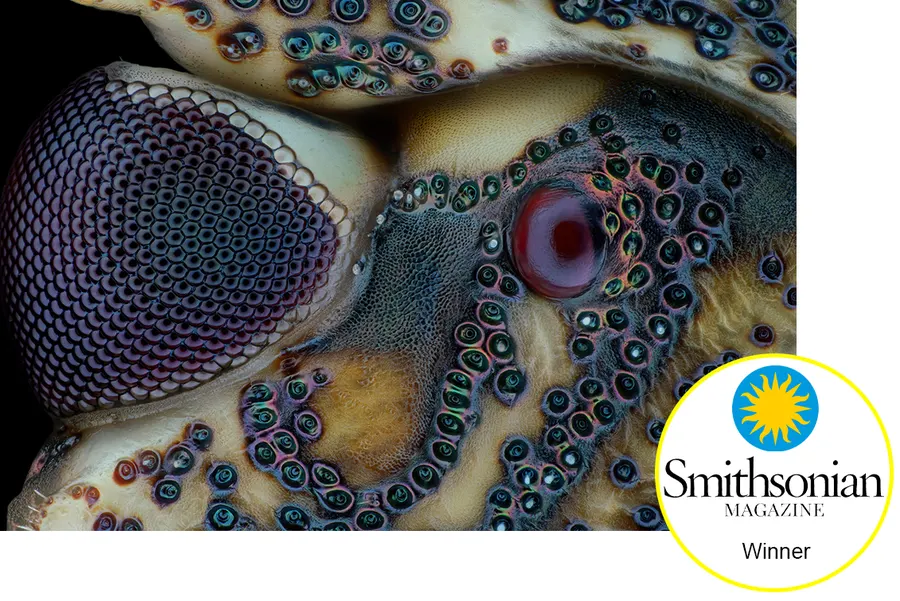
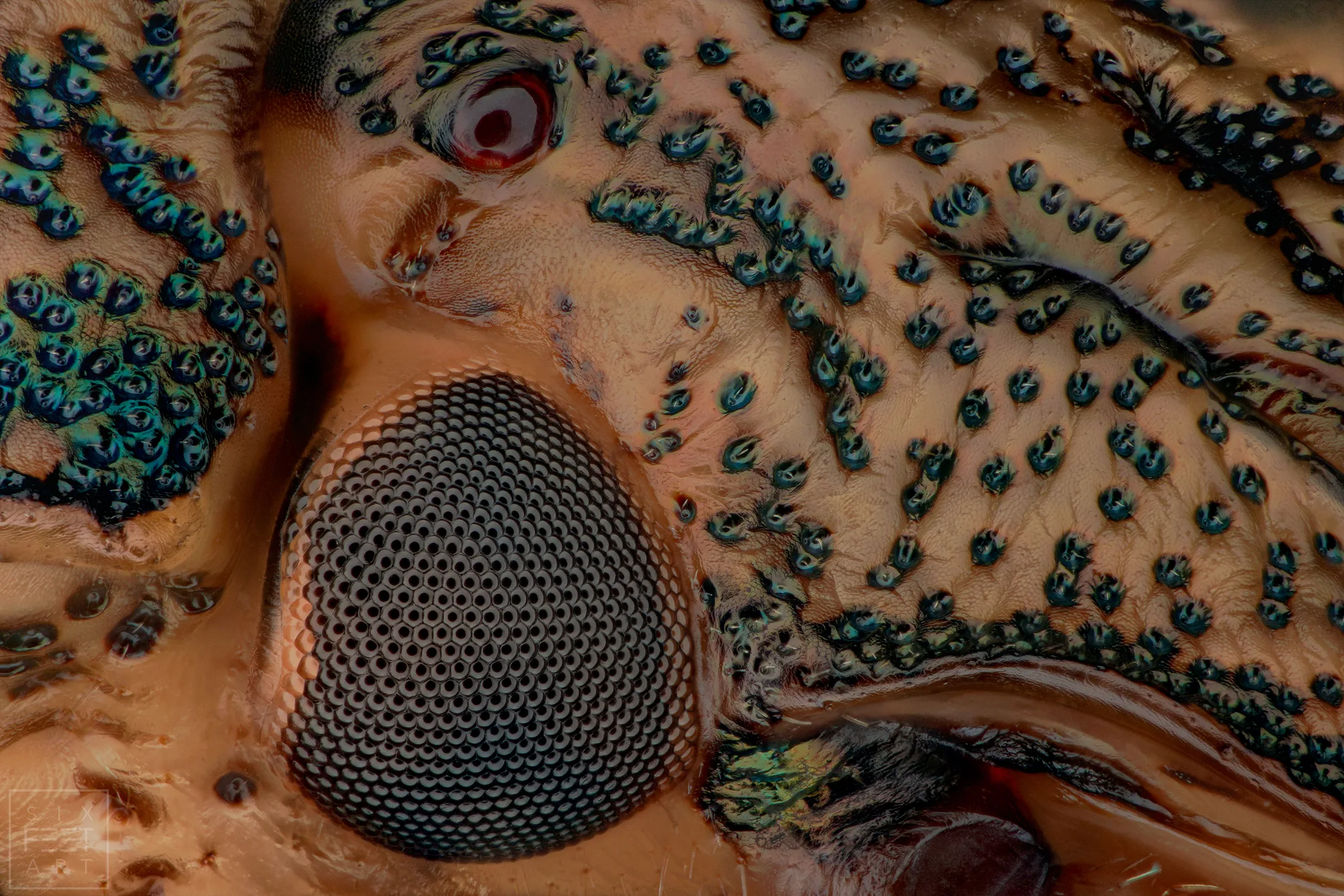
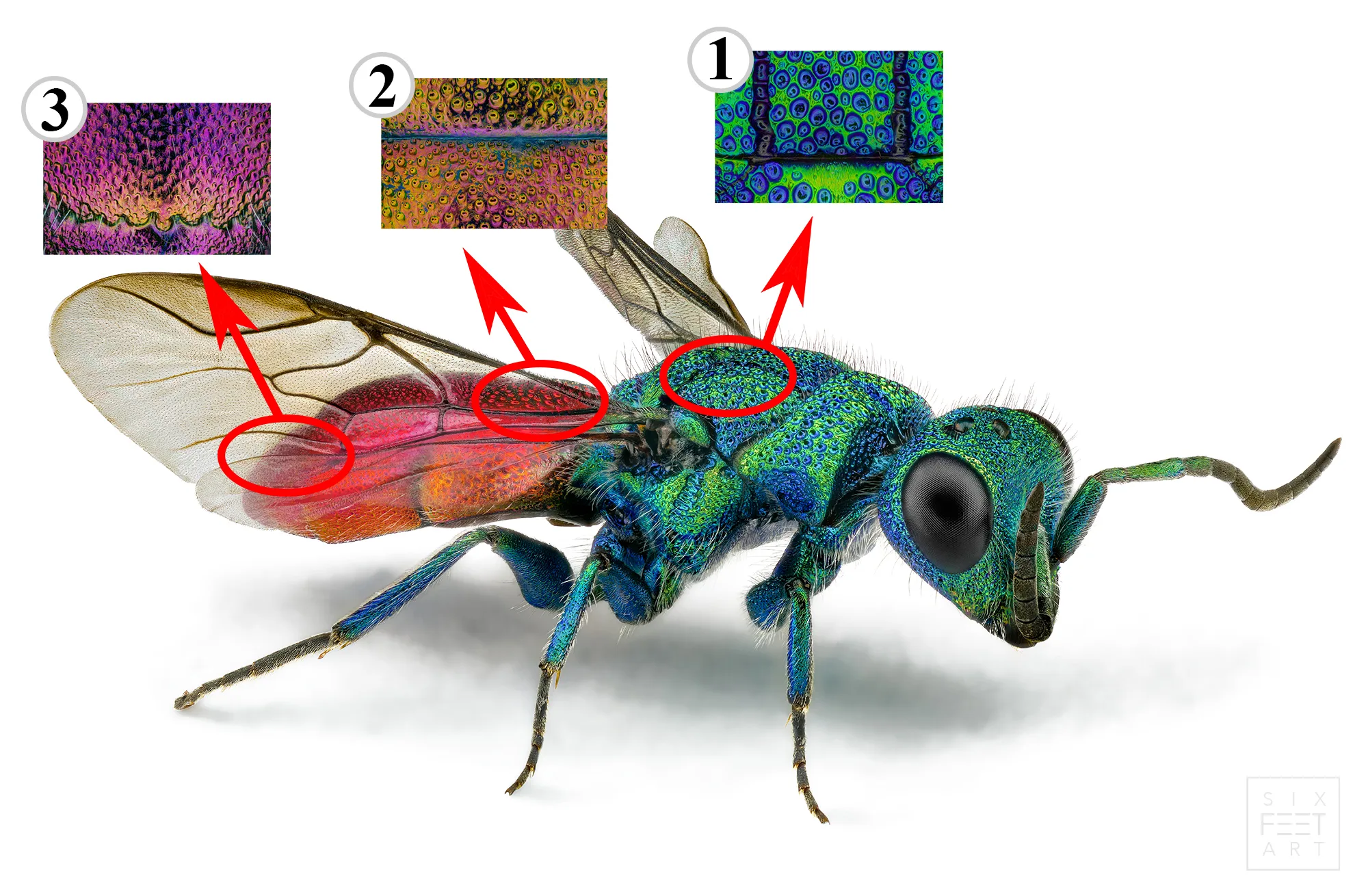
You don’t even have to look closely to see, even from a distance, that this insect is a flying jewel. Yet at 20× magnification the nimble little cuckoo wasp reveals even more breathtaking colours and structures than you could ever imagine.
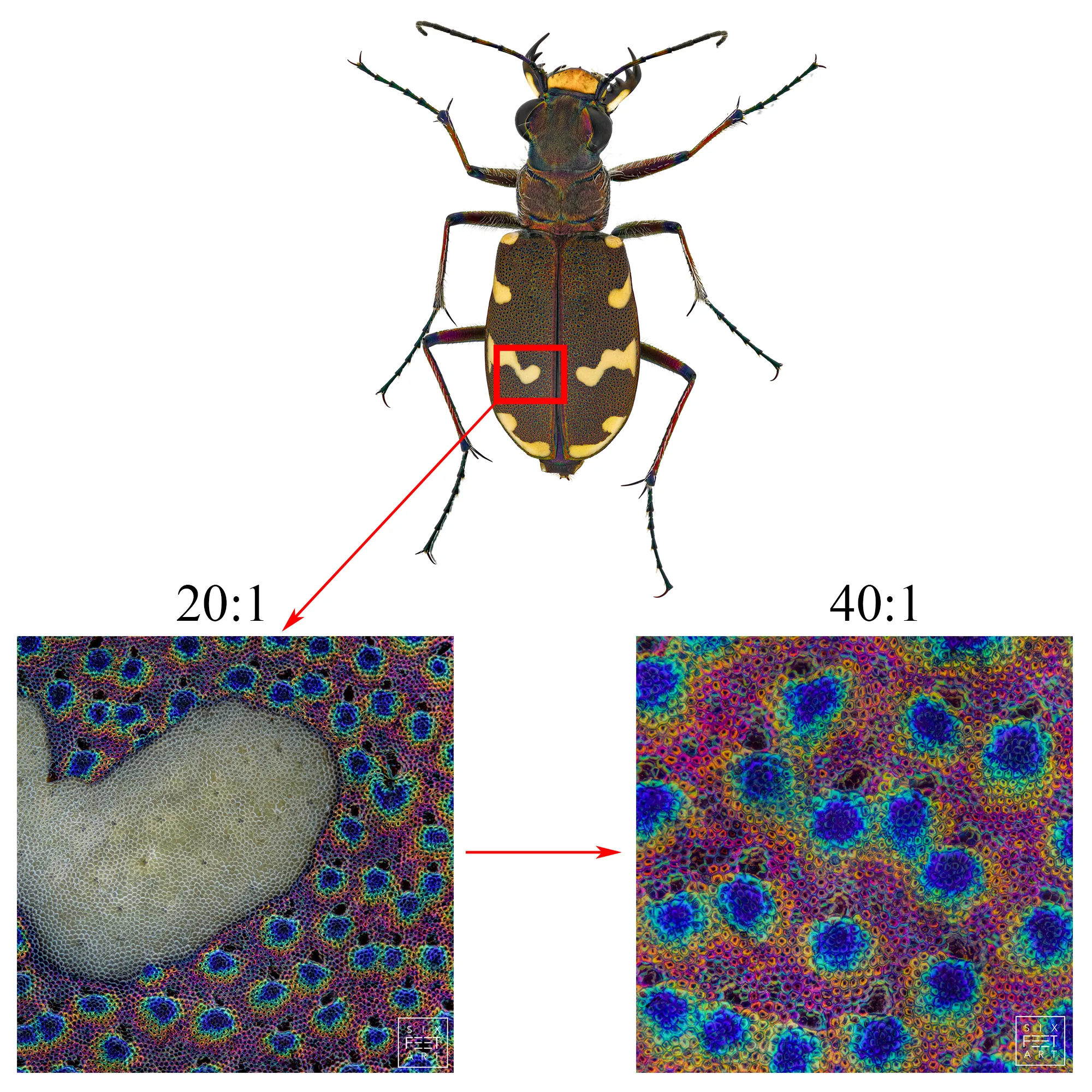
Hidden colours
Pushing into higher magnifications reveals wonderful things. The wings of a tiger beetle, which look brown to us, show marvellous colours at 20:1 and 40:1.
Music video with Dominik Eulberg
Eintagsfliege – a plea from the insects
In truth, we live on a planet of insects. They were the first living creatures to take to the air. They have populated our Earth for more than 400 million years and will probably do so until its end. With more than a million described species, insects make up over 80 per cent of all animal species. Around a quintillion insects live on Earth – 143 million times more than humans. Around 90 per cent of the terrestrial animal biomass consists of insects. Ants alone outweigh all humans combined. They are the busy service providers of our ecosystem; without them it would no longer function. They prepare our soil, act as our waste disposal and are indispensable for pollinating most plants. They are a kind of life insurance for us, and we should be endlessly grateful to them – grateful, too, that we may share “their” planet with them.
Yet they do not receive the respect and esteem they deserve. We kill them with poisons, shred their habitats and swat them with the newspaper at the breakfast table. To shed more light on this deplorable state of affairs, I teamed up with the conservationist and musician Dominik Eulberg. Elaborate focus and 3D stacking make visible what was previously hidden. Over three years, 35,088 single images became a fascinating video. The aim: to portray native insects the way we portray people – as individuals.
Looking at the images corrects our “distorted” view, because suddenly we are looking graceful creatures in the face, eye to eye. We see details, colours, shapes and structures that cannot be seen with the naked eye. A previously hidden treasure chamber full of shining jewels opens up before us. Former disgust and aversion give way to childlike wonder. This change of perspective flips an inner switch. We understand again that we share a deep connection with all living beings: we are all linked in one great ecosystem and all share a common origin.
We begin to grasp once more that everything that goes against nature ultimately goes against us humans. Every living being has its purpose and its place in nature; each is an important cog in an ecosystem whose services we use every day. If we continue to ignore this in our anthropocentric hubris, humanity itself – as Homo suicidalis – risks becoming a mayfly. May this sparkling plea from the insects wake up as many people as possible.
I was a guest on Timster, the youth magazine on KiKA, the children’s channel of ARD and ZDF.
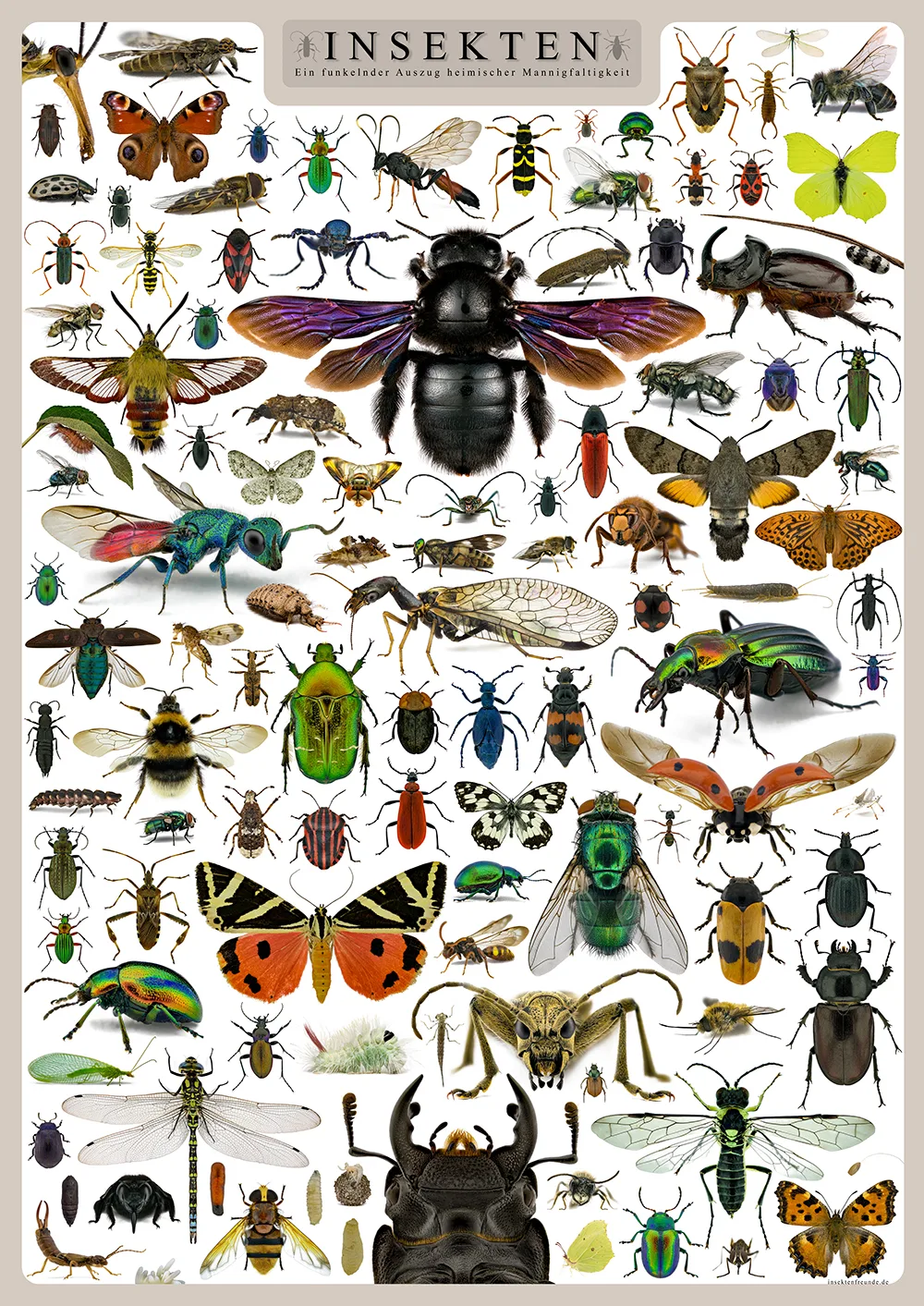
Poster “Insects – a sparkling extract of native diversity”
My first insect poster – since succeeded by “Insects” with 194 subjects.
Deliberately free of distracting text, it is meant to awaken the spirit of discovery. Which insect is that? How can I find out what it is? Didn’t we see that in the park today?
I like to ask children whether you are allowed to touch butterflies, and the unanimous answer is always: “NO!”
So far, so good. When I then ask why, the answer is often: “Because then they die.” That’s when I like to explain:
What we perceive on our fingers as “butterfly dust” are in fact tiny scales. They are filled with air and help the butterfly with lift, but they also give it its colour and pattern. Over the course of its life a butterfly loses more and more of these scales, and its wings can even become partly transparent. The fewer scales it has, the harder it is to fly. Once the effort of flying exceeds the energy it gets from flower nectar, it dies of exhaustion.
So a butterfly does not die simply because someone picks it up – that’s nonsense. But be aware that by rubbing off its scales you are probably shortening its life. A butterfly can also die early while it still has all its scales – because of parasites, or simply because it has mated and its life cycle is complete. Touching it won’t kill it, but you still shouldn’t do it.
Besigheim
The exhibition
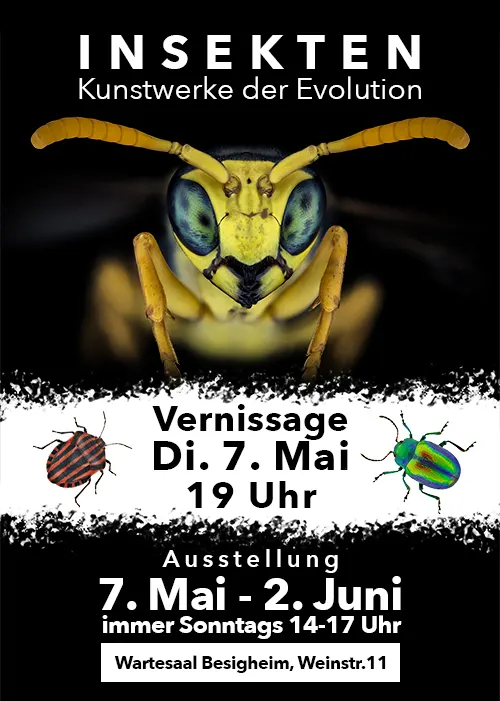
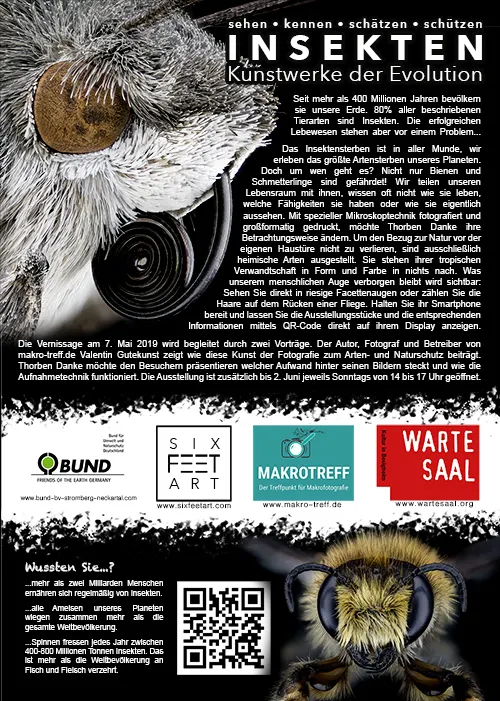
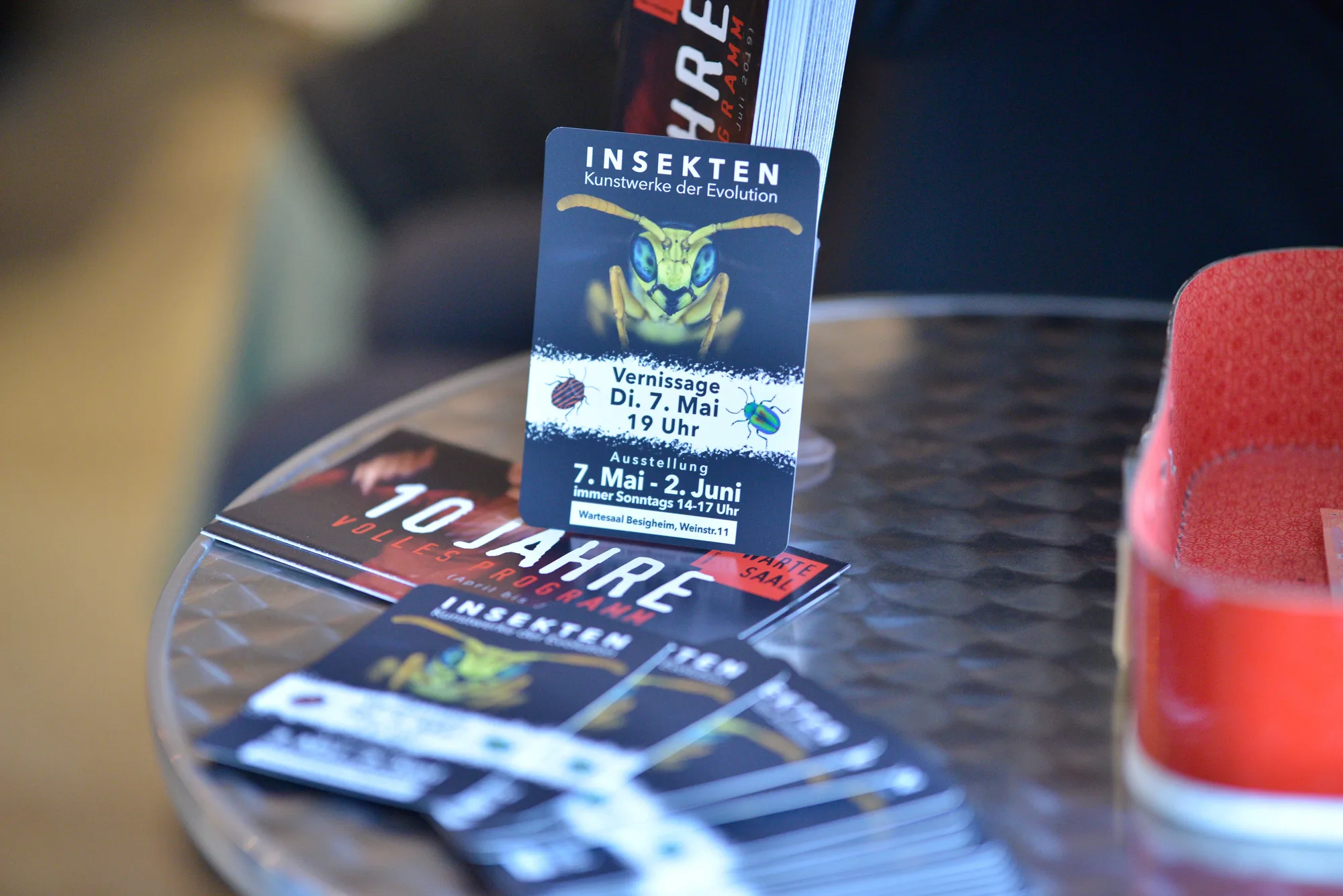
The flyers for my exhibition – click to enlarge.
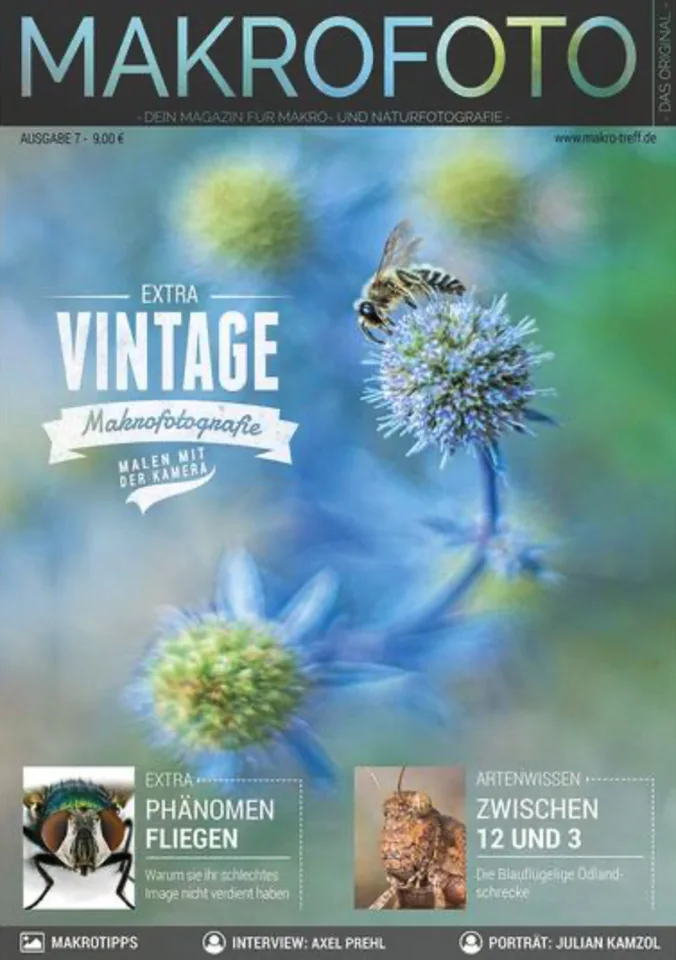
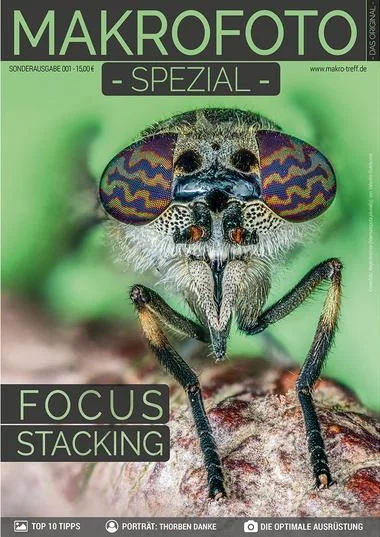
MAKROFOTO issue 7
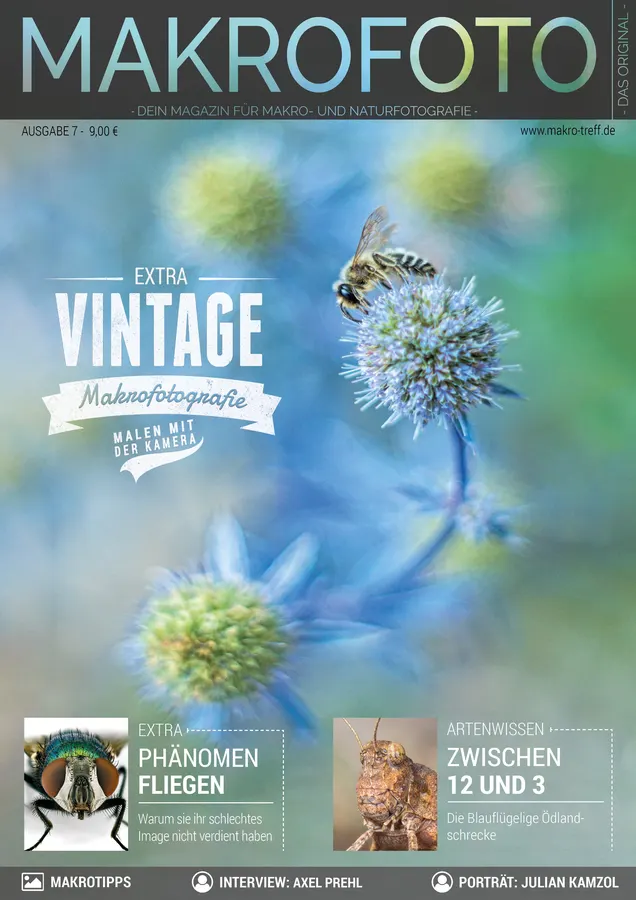
The seventh issue of MAKROFOTO, with its cover story on vintage macro photography, features an image series of mine about flies. You can find the issue here.
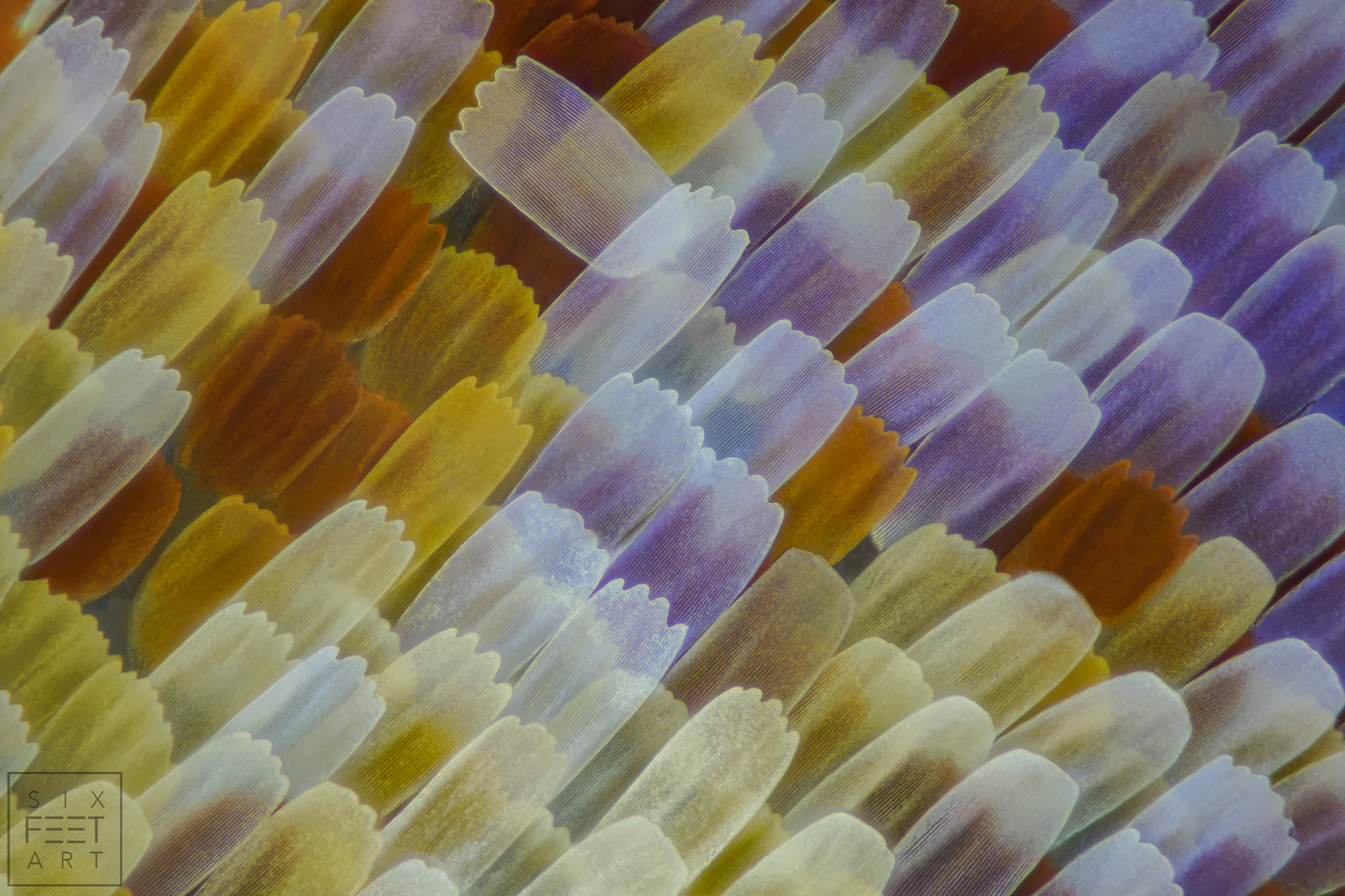
40:1 – the wing of a peacock butterfly
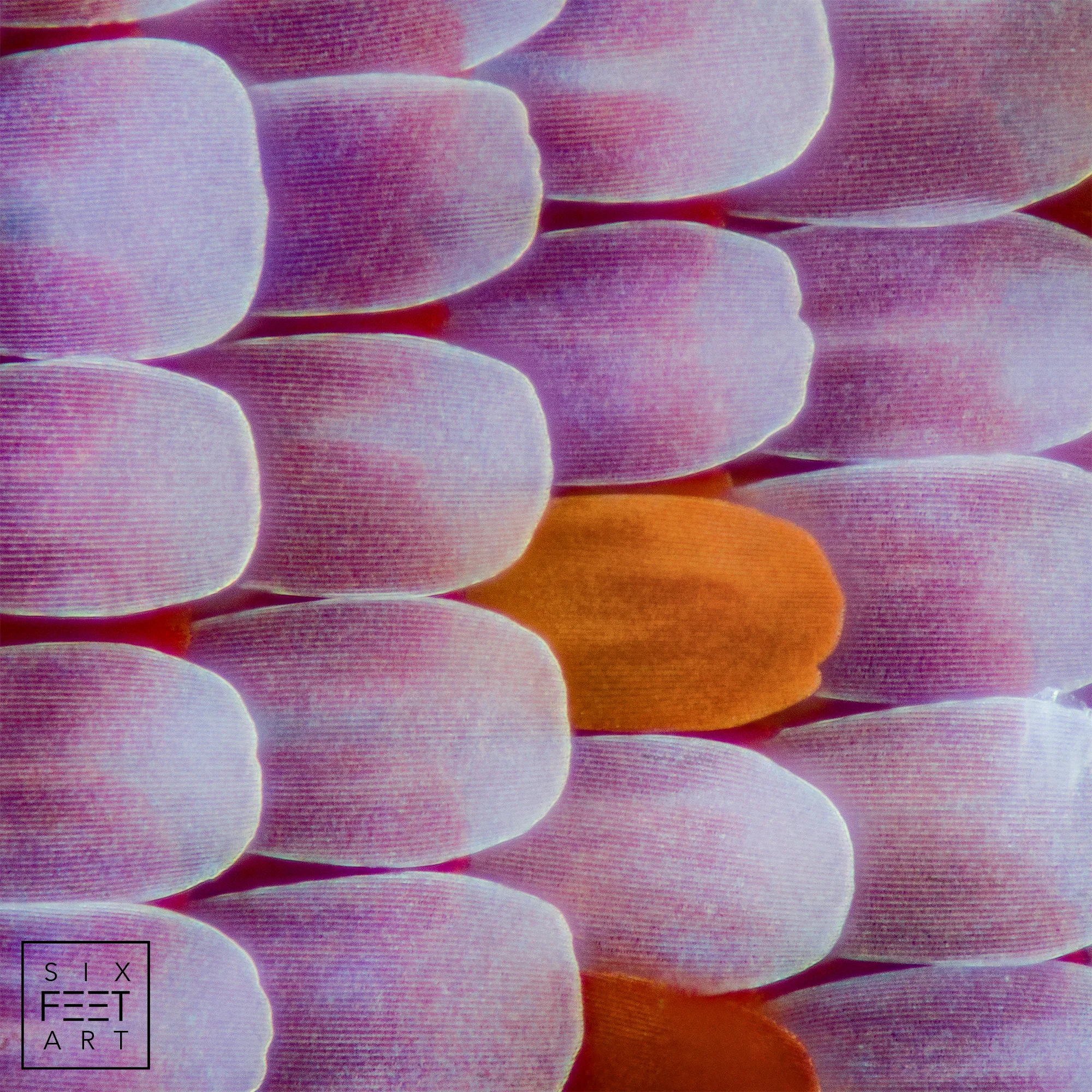
Another step up in magnification takes me to 40:1. Here the wing of a peacock butterfly was magnified using 100 steps of 0.00098 mm. The wing scales have longitudinal ridges, with cross-ribs between them for stability – already partly visible here.
Besigheim
Exhibition in Besigheim
My large-format prints were on display in Besigheim from 7 May to 2 June, supported by BUND (Friends of the Earth Germany) and the cultural association Wartesaal – many thanks for your support.
A visit to the beetle club
At universities, species identification has lost importance in degree courses, and young taxonomists are in short supply. An interesting report by Marco Krefting featuring my photo series: Spiegel.de (in German).
I used the quiet days between the holidays to change several small things in my shooting technique. Balancing light that is too soft – making shiny subjects look flat – against light that is too hard and exaggerates contrast cost me a few nerves. But the resulting compromise convinced me completely. You can also find the image in my gallery. Available for printing at 5300×5300 pixels.